Viral infections can be classifed into acute or chronic. In the case of an acute infection, the virus survives in the host for a limited period of time before being cleared; if the virus persists in its host, the infection becomes chronic.
Chronic hepatitis B virus (HBV) infection is the most common worldwide, with 468 million people infected in 2016; moreover, it is calculated that about 30% of the world population (2 billion people) had encountered this virus at least once during their life.
HBV infects the liver causing a disease called hepatitis, characterized by inflammation and cell death.
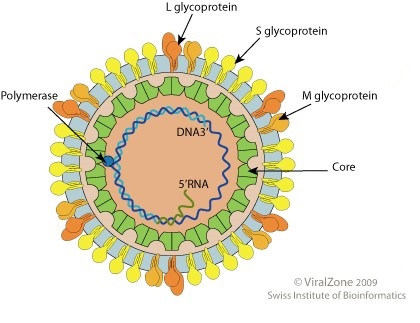
HBV is a DNA virus belonging to the Hepadnaviridae family. Its capsid containing the genome is made of the Core protein, while its envelope consists of three different forms of the Surface protein, called short (S), medium (M) e large (L). The L surface protein is responsible for the attachment to the target cells and for its entry inside them. Other viral proteins are the Polymerase, necessary for viral replication, protein X with regulatory functions, and protein E that is secreted from the infected cell.
Infection occurs through contact with blood or other body fluids from an infected individual (orizzontal transmission); another way of infection is the mother-infant transmission during pregnancy or at birth (verical transmission).
HBV can survive outside the organism for at least 7 days, and incubation time varies between 30 and 180 days. The outcome of the infection depends mostly on the age of the host: 95% dei newborns and 5% of adults develop a chronic infection. In the rest of the cases, the outcome is an acute infection that may either be self-resolving or lead to fulminat hepatits in 1% of cases. Without liver transplantation, acute fulminat hepatitis can be lethal.
In the case of a chronic infection, the host can with time develope a condition known as cirrhosis, in which liver function is compromised, or even a tumour called hepatocellular carcinoma.
HBV genome is made of one molecule of double stranded DNA called rcDNA (relaxed circular DNA), in which one of the strands is not complete. Once inside the liver cells, the cellular mechanisms that normally repair our DNA, recognize the uncomplete strand as damaged DNA and repair it. This is how a mini chromosome called cccDNA (circular covalently closed DNA) is formed; it is the most stable form of HBV DNA, and it is necessary for the replication of the virus and for the production of its proteins.
Sometimes, the viral DNA can insert itself in the host DNA (integration) losing the ability to replicate and to produce its proteins except for the Surface one. The integration of viral DNA occurs at random sites and can interrupt or alter genes encoding for human proteins. Integration is one of the causes of hepatocellular carcinoma onset.
Nowadays there is no cure for the definitive elimination of the virus from the infected organism, but there are treatments able to slow down the progression of the disease and to reduce the onset of cancer. These treatments act inhibiting viral replication, but, since the virus is not eliminitaed, patients need to take antivirals for a long time or even for life.
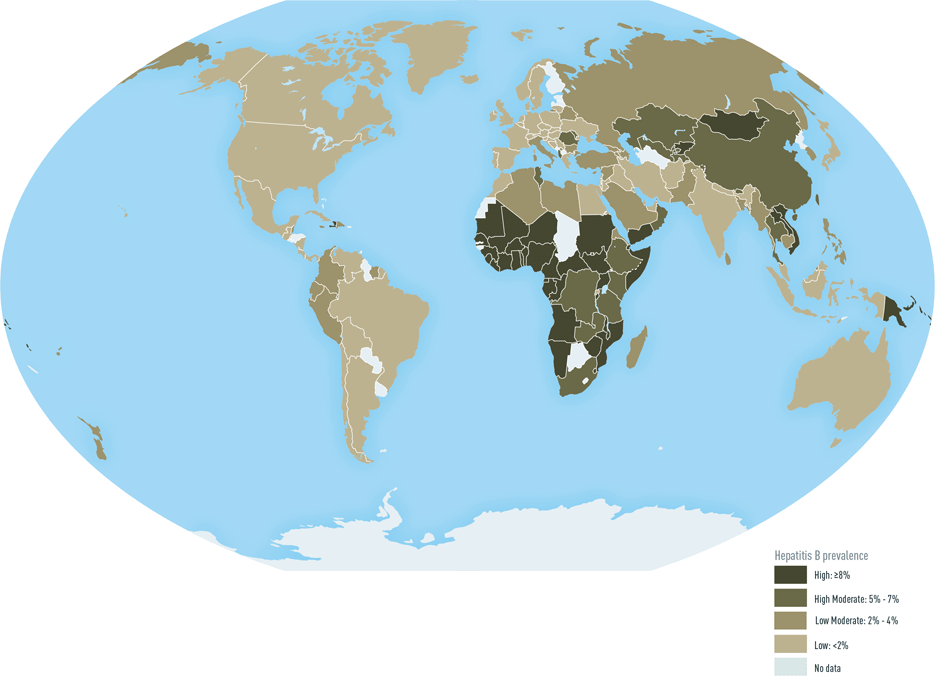
A vaccine for HBV has been available since 1982; the vaccination program has reduced the infection rate worldwide, even though HBV is still endemic (present and persistent) in some areas of the world (China, South-East Asia, Africa, Middle East, Amazonia).
The vaccine is safe and effective in 95% of individuals with a healthy and functioning immune system (immunecompetent), ensuring long-lasting protection (at least 20 years). After vaccine administration our immune system becomes able to produce antibodies against the surface protein; in case of contact with HBV viral particles, such antibodies could intercept the virus before it reaches the liver, avoiding the infection and the following disease. Vaccination has decreased both the HBV infection rate and the onset of liver cancer. In 2017, in Europe, only 0.4% of children under 5 were infected with HBV, and most of the 15 million people with hepatis B were adults born before the vaccine became widely available in the 1990s.
Bibliography
Global, regional, and national incidence, prevalence, and years lived with disability for 328 diseases and injuries for 195 countries, 1990–2016: a systematic analysis for the Global Burden of Disease Study 2016, GBD 2016 Disease and Injury Incidence and Prevalence Collaborators, Lancet 2017 https://doi.org/10.1016/S0140-6736(17)32154-2
Mechanisms of HBV-induced hepatocellular carcinoma, Levrero M. et al., Journal of Hepatology 2016, https://doi.org/10.1016/j.jhep.2016.02.021
HBV DNA Integration: Molecular Mechanisms and Clinical Implications, Tu T. et al., Viruses 2017, http://doi:10.3390/v9040075
Hepatitis B Virus Infection, Trépo C. et al., Lancet 2014, http://10.1016/S0140-6736(14)60220-8
World Health Organization: https://www.who.int/news-room/fact-sheets/detail/hepatitis-b
Map of HBV prevalence from https://wwwnc.cdc.gov/travel/yellowbook/2020/travel-related-infectious-diseases/hepatitis-b
 Virus&Co.
4 thoughts on “The most common chronic viral infection”