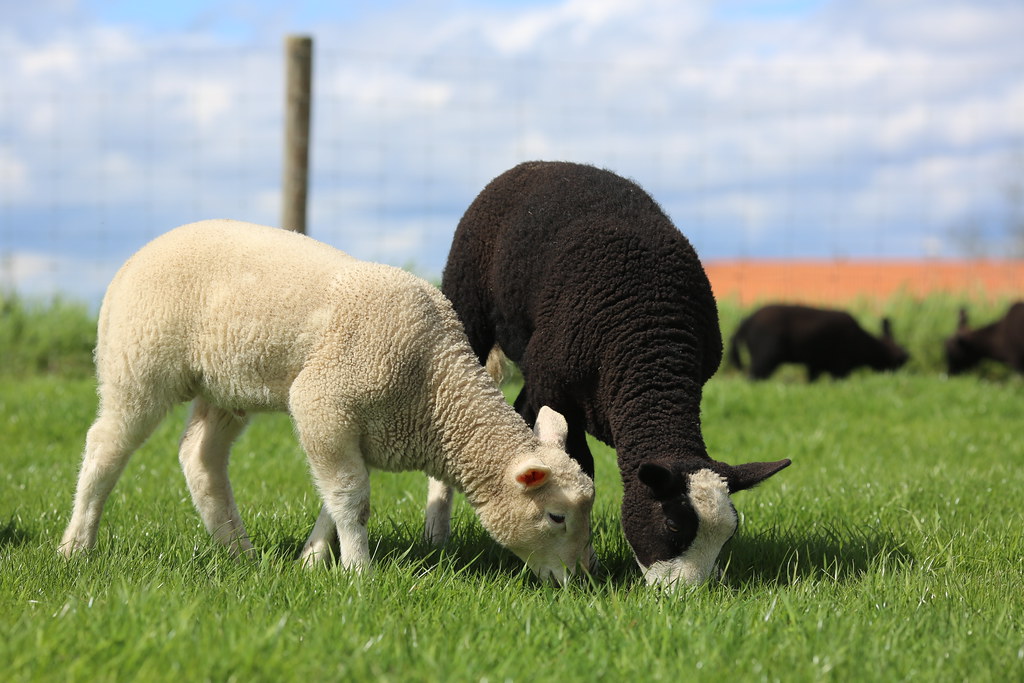
If you, like me, live in the Mediterranean basin, you have probably heard about the Bluetongue Disease. Let’s see together what the Bluetongue Disease is, what causes it, and how to prevent it.
What is Bluetongue, and how does it spread?
The Bluetongue Disease is an infectious disease of the ruminants, and it is caused by the Bluetongue virus (BTV). It is also known as catarrhal fever.
It is a non-contagious disease since it is not directly transmitted from animal to animal: in fact, it is transmitted through the bite of an insect (vector). The Culicoides insects acquire the Bluetongue virus when they feed on the blood of infected animals, and they transfer it by biting other animals in subsequent blood meals. The virus replicates inside the vectors during their entire lives. Only female Culicoides feed on animal blood and therefore can transmit the virus.
Since Bluetongue affects livestock (mainly sheep, but also cattle and goats), it causes great economic loss, estimated at 3 billion dollars per year. This disease is present globally together with the seasonal presence of Culicoides, being endemic in Europe and the Mediterranean basin. New Zealand and Antarctica are the only territories where the Bluetongue virus has not been found so far.
According to The World Organization for Animal Health (WOAH), Bluetongue is a disease of mandatory notification: it is mandatory to report the presence of infected animals to the health authorities.
What species are affected by the Bluetongue disease?
Both domestic and wild ruminants can be infected by the Bluetongue virus. The Bluetongue disease is especially severe in sheep: they are the most affected species, with a mortality of up to 70%.
The Bluetongue virus can infect also cattle, but the symptoms of the infection in this species are very mild. Nevertheless, it is extremely important to prevent infection in cattle: the virus remains in their blood for up to 60 days, being an important reservoir for the insects that feed on them, and therefore contributing to the persistence of the virus in the territory.
The Bluetongue virus does not infect humans: the Bluetongue disease is not a zoonosis.
What are the symptoms of Bluetongue?
The symptoms of the Bluetongue disease are fever, nasal congestion, mucosal oedema and secretion. In severe cases, the tongue of the infected animals is swollen and cyanotic (blue) and protrudes from the mouse: this typical manifestation of the disease is at the origin of its name. When the virus infects pregnant female animals, it may lead to abortions and foetal malformations. In the most severe cases, the infected animal dies within 8-10 days, or it may slowly recover after a long period characterised by hair loss, sterility and growth delay.
What does the Bluetongue virus look like?
The Bluetongue virus (BTV) is a complex virus, belonging to the Orbivirus genus. Thanks to studies from the last 30 years we now understand its structure and mechanisms, as well as those from other similar viruses.

The BTV genome is organised in 10 segments of double-stranded RNA, arranged in rings inside a protein envelope (inner capsid); together they constitute the core particle, surrounded by an outer capsid to form the complete virus.
The Bluetongue virus exists in at least 27 slightly different forms (serotypes) that determine the severity of the disease. Some serotypes, including serotype 8 (BTV-8) responsible for the 2006 outbreak in Europe, can cross the placental barrier causing abortions or foetal malformations.
Is there a treatment for Bluetongue?
There is no therapy to limit or cure the symptoms of Bluetongue.
Animals can be vaccinated against the serotype of the Bluetongue virus circulating on the territory. It is a live attenuated vaccine, in other words, it is a virus that does not cause the disease, but can still replicate. For this reason, this kind of vaccine cannot be administered during the Culicoides season, because it might recombine with the original virus inside the insect. Moreover, this vaccine cannot be administered to pregnant female animals, because it may cause abortions.
To date, a vaccine able to protect against all Bluetongue serotypes is not available.
How can we prevent the Bluetongue disease?
Vaccination is one of the tools in our hands to protect animals from the disease, to reduce the number of infected animals, and therefore limit the spread of the Bluetongue virus by restricting the reservoir available to its vectors.
There are also indirect methods to prevent the spread of the Bluetongue virus. One of them is the control of the vector population: reducing the presence of stagnant water where insects lay their eggs is something that all of us can contribute to (avoiding the accumulation of water in plant saucers and flowerpots, regularly cleaning drinking troughs, etc). In areas where the virus is present, animals can be protected by physical barriers (mosquito nets) and by the use of insecticides.
Another method to prevent the transmission of Bluetongue is the control of animal transportation, including also semen and embryos for breeding purposes. Local health authorities determine when and how livestock transportation between affected areas and virus-free areas can be performed.
Bibliography
- OIE Technical Disease Card: Bluetongue, World Organisation for Animal Health, https://www.woah.org/en/document/bluetongue/
- Febbre catarrale degli ovini – Blue tongue (BT), Italian Ministery of Health, https://www.salute.gov.it/portale/sanitaAnimale/dettaglioContenutiSanitaAnimale.jsp?id=210&tab=1
- The molecular biology of Bluetongue virus replication, Patel A. & Roy P., Virus Research 2014, https://doi.org/10.1016/j.virusres.2013.12.017
- Vaccination as a Strategy to Prevent Bluetongue Virus Vertical Transmission, Rojas J.M. et al., Pathogens 2021, https://doi.org/10.3390/pathogens10111528
Image: “Sheeps – Balwen Welsh Mountain (black)” by Alexandre Dulaunoy is licensed under CC BY-SA 2.0.
 Virus&Co.