Understanding long-COVID-19

Now that the emergency phase of the COVID-19 pandemic has officially ended, we are left to face its long-term consequences. About 40% of patients who had COVID-19 in the past three years have experienced symptoms months after the infection when they are no longer contagious. This condition was initially defined as long-COVID by the patients – the first to raise attention to their long-lasting symptoms using social media – and is now known as post-COVID-19 condition (PCC).

What are the symptoms of long-COVID?

The most common symptoms of long-COVID are fatigue, shortness of breath, pain, increased heart rate, altered sense of taste and smell, headache, and a long list of neurological and psychological impairments. Patients often describe their difficulty with concentration and short-term memory using the powerful expression “brain fog”; sleep disorders, anxiety, and depression are also common complaints. These symptoms can either persist after the acute infection (with negative COVID-19 tests at this point) or develop weeks after the end of the disease, even if it was mild.

Who is most at risk of long-COVID?

Given the hundreds of thousands of individuals who have been infected by SARS-CoV-2 so far, the number of people at risk of suffering long-term consequences is very high. PCC represents both a healthcare burden and a societal problem, since it severely impacts the quality of life, reducing the ability to work and engage in social activities. Interestingly, PCC is more frequent in females, while the chances of having severe acute COVID-19 are higher in males.

Why does long-COVID happen?

The causes and mechanisms of PCC are yet to be characterised at the molecular level, leaving patients suffering from this condition without proper treatment. The study of animal models, extremely helpful in understanding acute COVID-19 and in testing vaccines and treatments, is helping to unveil some of the aspects of long-COVID. To date, no animal model fully reproduces this disease as it occurs in humans, but several studies conducted on different species have yielded interesting results.

Animals to understand how long-COVID affects the brain

Hamsters and mice have been employed to study COVID-19.

Hamsters infected with SARS-CoV-2 had a modified expression of specific genes in the brain one month after infection when the virus was no longer detectable. These animals, compared to those that were never infected, over-express genes involved in inflammation. Another study has found inflammation and accumulation of altered forms of two proteins called tau and alpha-synuclein in the brain of hamsters two weeks after infection with SARS-CoV-2. This is particularly interesting because the accumulation in the brain of these modified proteins is a feature of neurodegenerative diseases (like Parkinson’s and Alzheimer’s), suggesting similar mechanisms between these three conditions. Moreover, behavioural studies have shown that infected hamsters have reduced spontaneous activities and increased sensitivity to pain, resembling some of the neurological symptoms reported by patients, probably due to a continuous inflammation of the nervous system.

Similarly, long-term inflammation of the brain after infection with SARS-CoV-2 has been found in mice, even when the respiratory disease was mild, and the virus was not detectable in the brain. Once again, inflammation was accompanied by altered gene expression suggestive of cognitive impairment like in ageing and Alzheimer’s disease.

Does vaccination protect from Long-COVID?

Importantly, most of the studies published so far involve non-vaccinated animals infected with the original strain of SARS-CoV-2, but since the beginning of the pandemic several variants have emerged, and a growing number of people have been vaccinated worldwide, improving our ability to fight the infection.

This brings up two important questions:

  1. Do the differences between variants influence the risk of having long-COVID and the intensity of the symptoms?
  2. Since long-COVID can still occur when infected after vaccination, is it different from the disease developed by non-vaccinated individuals?

What kind of studies about long-COVID will be needed?

To really understand how to tackle the long-COVID problem, more than one animal model will be necessary, with different combinations of variants, vaccination status, and genetic backgrounds. This is not an easy task: with so many factors to consider and such a wide range of possible outcomes, complex experiments will be needed.

Our research group, together with the other members of the EU-funded EPIVINF project, is working to understand a specific aspect of PCC: the impact of SARS-CoV-2 on the regulation of the host gene expression and how it can affect neurological health in the long term.

Bibliography:

Animal models to study the neurological manifestations of the post-COVID-19 condition, Usai C et al., Lab Animal 2023, https://doi.org/10.1038/s41684-023-01231-z

Website of the EPIVINF project: https://www.epivinf.eu/

Io e Londra – Memorie di una pandemia

Sono stata a Londra qualche giorno fa: un fine settimana lungo per ritrovare gli amici, passeggiare tra luoghi familiari e scoprirne di nuovi.

Continua a stupirmi come Londra mi faccia sentire a casa nonostante sia una metropoli, e nonostante ci abbia vissuto solo per poco più di due anni.

Certo, non due anni qualsiasi.

Mi trasferii a Londra nel settembre del 2019, pochi mesi prima che le nostre vite venissero stravolte. Appena il tempo di adattarmi alla nuova città e al nuovo lavoro. Ero a Londra quando venni a sapere di un nuovo virus emergente in Cina, quando furono individuati i primi preoccupanti casi in Europa e quando l’OMS dichiarò la pandemia. Ero a Londra quando iniziai a scrivere su questo blog, e quando, come molti altri scienziati, reindirizzai il mio lavoro per cercare di posizionare qualche tassello di questo immenso puzzle scientifico, ancora oggi incompleto.

La pandemia è il maggior trauma collettivo che abbia vissuto nella mia vita adulta. Mi sono ritrovata da sola in un paese straniero, da dove guardavo con incredulità le notizie che arrivavano dall’Italia, il primo paese europeo colpito così ferocemente dalla pandemia – il mio paese, al quale però non potevo tornare.

Nonostante ciò, custodisco con tenerezza i ricordi della mia vita a Londra.

È merito delle persone che avuto al mio fianco durante quei due anni (sono stata ospite di alcune di loro durante la mia ultima visita) che non mi hanno mai fatto sentire sola. Qualcuno mi ha detto che non sentiamo nostalgia dei posti, bensì dei tempi. Ovviamente non sento la nostalgia della paura, dell’incertezza e dell’angoscia che abbiamo provato nel 2020, ma sono stati senza dubbio tempi di intense emozioni condivise da tutti noi, che in qualche modo ci hanno unito.

Sarà impossibile dimenticare quei tempi e quelle sensazioni, e Londra avrà sempre un posto speciale nel mio cuore.

Foto di Carla Usai. The National COVID Memorial, St Thomas Hospital, London (UK).

London and me – Memories of a pandemic

I have been to London recently: a long weekend catching up with friends, strolling around familiar places, and discovering new ones.

Once again, it has struck me how London makes me feel at home, even if it is a metropolis and I lived there only for a little more than two years.

Two years like no other.

I moved to London in September 2019, and I had only a few months to adjust to the new city and workplace before our lives were turned upside-down. I was in London when I heard a new virus had emerged in China, when the first cases in mainland Europe were worryingly reported, and when the WHO declared the pandemic. I was in London when I started my science communication blog, and when, like many other scientists, I redirected the focus of my research, trying to add small pieces to this still uncompleted scientific puzzle.

The COVID-19 pandemic has been the strongest collective trauma I have experienced in my adult life. I found myself alone in a foreign country, watching in dismay what was happening in Italy, the first European country fiercely hit by the pandemic – my home country to which I was not allowed to return.

Despite all this, I have very fond memories of my time in London.

For that, I have to thank the people I was surrounded by (some of them were my gracious hosts during my last visit) that never made me feel alone. Someone told me that we miss the times, not the places. I surely do not miss the fear, the uncertainty, and the sorrow we experienced in 2020, but it undoubtedly was a time of deeply felt and collectively shared emotions that brought us together.

I will never forget those times, I will never forget those feelings, and London will always hold a special place in my heart.

Photo by Carla Usai. The National COVID Memorial, St Thomas Hospital, London (UK).

Come si lavora con i virus?

A sinistra: pittogramma che indica il rischio biologico. A destra: io e la mia collega Núria (di spalle) all’interno di un laboratorio di biosicurezza di livello 3.

Se conosci i tuoi nemici e conosci te stesso, non avrai paura del risultato neanche in cento battaglie”, diceva il generale cinese Sun Tzu.

Come i nemici da affrontare in battaglia, anche i virus possono essere molto diversi tra loro, ciascuno con le proprie armi per causare malattie e le proprie strategie per trasmettersi da un individuo a un altro. Conoscere le caratteristiche dei nostri nemici e le nostre armi specifiche di difesa e contrattacco (la disponibilità di vaccini o cure efficaci) ci permette di assegnare a tutti i virus e microrganismi in generale una classe di rischio biologico e di comportarci di conseguenza.

  • Microrganismi di classe 1: non causano nessuna malattia
  • Microrganismi di classe 2: causano malattie nell’uomo o negli animali, rappresentano un rischio moderato per la collettività, esiste un vaccino efficace
  • Microrganismi di classe 3: causano malattie molto gravi, si propagano facilmente, esiste un vaccino efficace
  • Microrganismi di classe 4: causano malattie molto gravi, si propagano facilmente, non esiste un vaccino o una cura efficace

Ad ogni classe di rischio biologico corrisponde un livello di biosicurezza, ovvero un insieme di norme specifiche descrivono il tipo di dispositivi di protezione individuali (per l’operatore) e collettivi (per le altre persone e l’ambiente), ma anche il tipo di struttura in cui questi microorganismi possono essere maneggiati.

In passato ho lavorato con i virus dell’epatite HBV e HDV e attualmente lavoro con SARS-CoV-2: tutti questi virus appartengono alla classe 3, e tutti gli studi devono essere svolti in una struttura appropriata chiamata laboratorio di biosicurezza di livello 3.

Un laboratorio di questo tipo non è direttamente accessibile dall’esterno, ma è preceduto da almeno un’anticamera con una doppia porta. La pressione all’interno del laboratorio è inferiore alla pressione degli ambienti circostanti, per far sì che l’aria si sposti esclusivamente dall’esterno verso l’interno del laboratorio impedendo la fuoriuscita di qualsiasi tipo di materiale volatile, tra cui i virus. Come ulteriore misura di sicurezza, in questi laboratori è proibito lavorare da soli.

Per lavorare con SARS-CoV-2 e gli altri microrganisi di classe 3 è necessario indossare due tute: quella a diretto contatto con il corpo è impermeabmile e lavabile, mentre quella a contatto con l’ambiente è impermeabile e usa e getta. La tuta esterna è dotata di un cappuccio, e ha una cerniera che deve essere chiusa completamente fino a coprire tutto il collo. Indossiamo anche due paia di guanti; il guanto esterno è più lungo e copre completamente il polsi e parte dell’avambraccio. Anche la parte della caviglia tra la scarpa e il bordo inferiore della tuta deve essere coperto da un materiale impermeabile.

Il naso e la bocca devono essere coperti da una mascherina FFP3, e per di più indossiamo un cappuccio con visiera collegato tramite un tubo a un respiratore (Powerd Air-purifying respirator, PAPR) che teniamo allacciato in vita come se fosse un marsupio. Il respiratore ha un motore e dei filtri, e pompa continuamente aria pulita dentro il cappuccio. In questo modo anche dentro il cappuccio si forma una differenza di pressione che permette l’ingresso unicamente dell’aria filtrata.

Dentro il laboratorio il virus può essere manipolato solo all’interno di una cappa di sicurezza biologica, ovvero un ambiente di lavoro delimitato, aperto parzialmente su un solo lato e dotato di filtri. Sul lato aperto viene creato un flusso d’aria verticale con una duplice funzione: 1) fa in modo che l’aria che entra venga diretta immediatamente verso i filtri prima di entrare in circolo nell’ambiente di lavoro e 2) impedisce che l’aria e i microrganismi con cui si sta lavorando escano dalla cappa. In questo modo si garantisce che il materiale biologico non venga contaminato e che l’operatore possa lavorare in sicurezza.

Solo gli avambracci dell’operatore entrano dentro la cappa biologica, il resto del corpo è separato dall’ambiente di lavoro da una lastra di vetro. Ogni volta che l’operatore interrompe il lavoro dentro la cappa per spostarsi in un’altra postazione all’interno dello stesso laboratorio deve disinfettare la parte esposta al virus (mani e avambracci coperti dai doppi guanti) con una sostanza viricida; lo stesso procedimento deve essere applicato a qualsiasi oggetto che venga portato fuori dalla cappa.

Una volta terminato il lavoro e messi in sicurezza i campioni biologici contenenti il virus, la cappa biologica, l’interno laboratorio e gli indumenti dell’operatore potenzialmente esposti al virus devono essere disinfettati.  Gli strati di dispositivi che proteggono l’operatore devono essere rimossi in un ordine ben preciso. Il cappuccio e il respiratore vengono disinfettati e riposti in contenitori con chiusura ermetica fino al prossimo utilizzo. Guanti, sovrascarpe, mascherina e tuta esterna vengono smaltiti come materiale potenzialmente contaminato

Per uscire dalla struttura di livello 3 bisogna passare attraverso una doccia automatica per evitare che residui del materiale di lavoro vengano portati all’esterno. L’accesso ai laboratori di livello 3 o superiore è strettamente limitato al personale autorizzato, per assicurare che tutte le procedure vengano eseguite correttamente che e il lavoro sia svolto nella massima sicurezza sia per l’operatore che per la collettività.

Bibliografia

Biosafety in Microbiological and Biomedical Laboratories (BMBL) 6th Edition | CDC Laboratory Portal | CDC

Laboratory biosafety manual, 4th edition (who.int)

How we work with viruses in the lab

Left: a biological hazard sign. Right: myself (foreground) and my colleague Núria (background) in a biosafety level 3 lab.

“If you know the enemy and know yourself you need not fear the results of a hundred battles”, said the Chinese warrior Sun Tzu.

As our enemies in a battle, viruses can differ a lot, each of them with their own weapons to cause diseases, and strategies to spread in the population. Knowing the characteristics of our enemies and our own weapons to defend ourselves and counterattack (the availability of vaccines and treatments) allows us to assign all viruses, and all microorganisms in general, to a biological risk group:

  • Risk group 1: microorganisms that do not cause any disease
  • Risk group 2: microorganisms that cause disease to humans or animals, represent a moderate risk for the community, vaccines are available
  • Risk group 3: microorganisms that cause severe disease and can easily spread in the population, vaccines are available
  • Risk group 4: microorganisms that cause severe disease and can easily spread in the population, vaccines are not available

To each risk group corresponds a biosafety level, which implies a specific set of rules describing the personal and collective protective equipment (to protect the operator and the environment, respectively), as well as the structural characteristics of the laboratories in which these microorganisms can be handled.

In the past, I have worked with the hepatitis viruses HBV and HDV, and now I work with SARS-CoV-2: they all belong to risk group 3, and must be handled in appropriate biosafety level 3 (BSL3) laboratories. Such laboratories are not directly accessible from the outside, and are delimited by at least an anteroom with a double door. The pressure inside de lab is lower than outside, so that the air can move exclusively into the lab, making it impossible for any volatile material, including viruses, to escape. As an additional safety measure, it is forbidden to work solo in a BSL3 lab.

To work with SARS-CoV-2 or any other group 3 microorganism, we need to wear two protective lab suits: the one in direct contact with our body is waterproof and washable, while the one in contact with the air is waterproof and disposable. The outer suit has a hood and a zipper that must be completely fastened to cover the neck. We also wear two pairs of gloves; the outer glove is longer and partially covers the forearm. The portion of the ankle between the shoes and the rim of the suit must be covered with waterproof material as well.

Mouth and nose are protected by a FFP3 mask, and on top of that we wear a hood with a face screen, connected to a Powerd Air-purifying respirator (PAPR), which we wear as a belt bag. The PAPR actively pumps the air through a filter to the inside of the hood causing a difference in pressure, so that only the filtered air can enter into the hood.

Within the lab, the virus can be handled exclusively inside a biosafety cabinet, a workstation provided with filters, and partially opened only on one side. On the open side, a vertical air flow provides two important functions: 1) forces the incoming air directly towards the filters before it can circulate in the workstation, and 2) prevents the air and the microorganisms to leave the interior of the hood. This guarantees that the biological material will not be contaminated and that the operator can work safely.

Only the hands and the forearms of the operator can go inside the biosafety cabinet, the other parts of the body are separated from the workstation by a glass screen. Every time the operator needs to move from the cabinet to another area of the lab, hands and forearms (covered by the gloves) must be cleaned with a virucidal product; the same must be done with any other object removed from the cabinet.

At the end of the experiment, the biological samples are properly stored, and the safety cabinet, the entire lab, as well as the protective clothing potentially exposed to the virus, must be disinfected. The layers of protective equipment worn by the operators must be removed following a specific order. The hood with the respirator are disinfected and stored in air-tight containers. Gloves, shoe covers, the mask and the disposable suit will be disposed of as potentially contaminated waste.

The exit from the BSL3 lab has a built-in automatic shower to guarantee that no biological residue is carried outside. Access to level 3 laboratories is restricted to authorized personnel, to ensure that the correct procedures are followed and that the studies are always carried out safely for both the operator and the society.

Bibliography

Biosafety in Microbiological and Biomedical Laboratories (BMBL) 6th Edition | CDC Laboratory Portal | CDC

Laboratory biosafety manual, 4th edition (who.int)

One Health: una salute globale per prevenire nuove pandemie

La pandemia degli ultimi anni ha reso ancora più evidente come la specie umana sia parte di un sistema molto esteso con elementi fortemente interconnessi e alla costante ricerca di equilibrio.

Due immagini che descrivono molto bene questo equilibrio e la sua precarietà sono il mercato di Wuhan, in cui venivano commercializzati animali vivi e molte specie diverse si trovavano a stretto contatto, e il ritorno, in pieno lockdown e con le attività umane ridotte al minimo, di specie selvatiche in ambienti urbani (come i cinghiali a Roma e i daini a Parigi). Ciò dimostra come la popolazione umana, gli animali e le piante siano strettamente legati dalla condivisione degli ecosistemi in cui vivono, soprattutto adesso che la popolazione umana in costante crescita richiede un incremento della produzione di cibo e dell’utilizzo di altre risorse naturali.

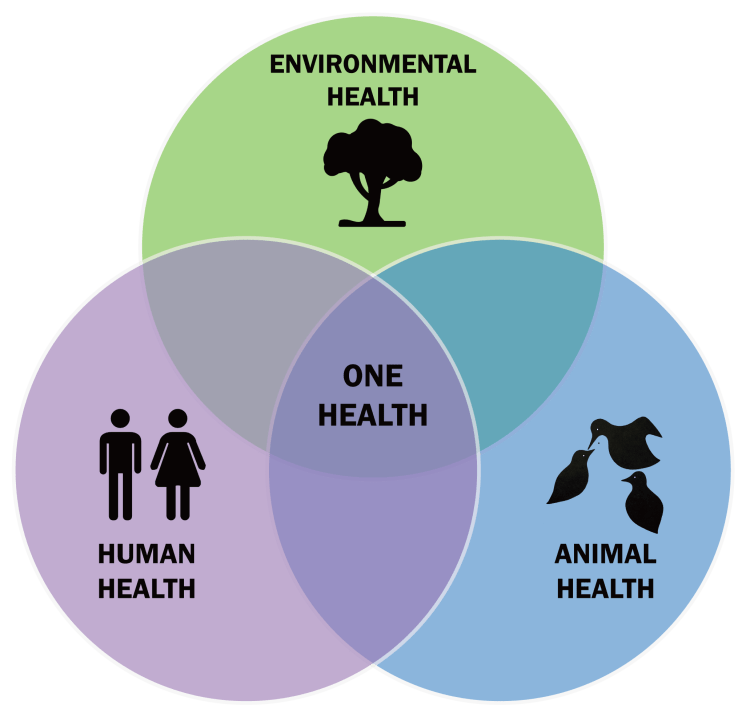
Per questo motivo è necessario unire programmi di sviluppo, legislazione e ricerca scientifica per preservare la salute pubblica; questo approccio, a cui partecipano attivamente governi, organizzazioni internazionali e enti di ricerca, è chiamato “One Health”, ovvero “una salute”, intesa come salute globale.

Rappresentazione schematica del concetto One Health, che include la salute ambientale, la salute umana e la salute animale
La triade del concetto One Health, di Thddbfk. Immagine presa da Wikimedia Commons su licenza CC BY-SA 4.0

Tra le organizzazioni internazionali che promuovono questo approccio, svolgono un ruolo importante l’Organizzazione Mondiale della Sanità (WHO), l’Organizzazione delle Nazioni Unite per l’Alimentazione e l’Agricoltura (FAO), il Programma delle Nazioni Unite per l’Ambiente (UNEP) e l’Organizzazione Mondiale per la Salute Animale (WOAH).

L’obiettivo è ridurre le minacce sanitarie nei punti di contatto tra esseri umani, altre specie animali e ambiente. Un tema importante è il fatto che alcuni microorganismi possono infettare sia l’uomo che altre specie animali, e passare facilmente da una specie all’altra sia per contatto diretto, che tramite il consumo di cibi contaminati (soprattutto nel caso dei batteri resistenti agli antibiotici). Per evitare situazioni pericolose da questo punto di vista bisognerebbe migliorare la salute degli animali da allevamento e limitare il contatto tra animali selvatici, animali domestici e esseri umani preservando gli habitat naturali tramite la regolamentazione delle attività umane.

Altri aspetti fondamentali sono la conservazione della biodiversità e la mitigazione del cambio climatico. L’aumento delle temperature, la deforestazione e la carenza d’acqua nelle zone e nelle stagioni in cui era normalmente presente, sta spingendo alcune specie animali a lasciare i loro habitat abituali alla ricerca di zone più ospitali, con l’effetto di aumentare i contatti tra specie che prima vivevano separate, e di conseguenza anche la possibilità di scambio di microrganismi tra queste specie.

Secondo uno studio pubblicato su Nature, esistono almeno 10.000 virus capaci di infettare l’uomo, ma la maggior parte di essi al momento circolano “indisturbati” tra gli animali selvatici. Gli autori hanno simulato il movimento di questi virus tramite le specie di mammiferi terrestri che li ospitano in base ai cambiamenti climatici previsti da qui al 2070; hanno ottenuto così nuove combinazioni di specie animali e alte probabilità di contatto con la specie umana in aree densamente popolate, soprattutto in Africa e Asia, che potrebbero permettere circa 4000 salti di specie anche con un aumento della temperatura globale inferiore a 2°C. Tutto ciò senza considerare i virus che infettano uccelli, rettili, anfibi e mammiferi marini!

Risultati come questi mostrano chiaramente come il riscaldamento globale causato dalle attività umane sia un fattore importantissimo nel favorire l’emergere di nuove zoonosi e potenziali pandemie.

In conclusione la salute dell’umanità dipende dalla salute del pianeta e di tutti i suoi elementi, ed è nostro dovere prendercene cura.

Bibliografia

Climate change increases cross-species viral transmission risk,  Carlson, C.J. et al.. Nature 2022 https://doi.org/10.1038/s41586-022-04788-w

From SARS to COVID-19: A previously unknown SARS- related coronavirus (SARS-CoV-2) of pandemic potential infecting humans – Call for a One Health approach El Zowalaty M.E., Järhult J.D. One Health 2020 http://10.1016/j.onehlt.2020.100124

Centers for Disease Control and Prevention: https://www.cdc.gov/onehealth/basics/index.html

World Health Organization: https://www.who.int/news-room/questions-and-answers/item/one-health

Istituto Superiore di Sanità: https://www.iss.it/one-health

One health: a healthy planet to prevent future pandemics

The recent pandemic has highlighted how humans are part of a broad system in which elements are strongly connected and on a constant search for equilibrium.

Two brilliant examples of this fragile balance are the Wuhan wet market, where live animals used to be sold and many species were in close contact, and the return of wild animals in urban settings (wild boars in Rome and deers in Paris) during the lockdown when human activity was reduced to the bare minimum. This show how closely connected the human population, the animals and also the plants are, since they share their ecosystems, especially now that the growing human population requires the production of more food, and therefore the exploitation of more natural resources.

For these reasons, integration of developmental programs, legislation and scientific research is needed to safeguard public health; this approach, which involves governments international organisations and research centers, is called “One Health”: a global health.

Schematic representation of the One Health concept, including environmental health, human health, and animal health
The triad of the One Health concept, by Thddbfk. Taken from Wikimedia Commons under a CC BY-SA 4.0 licence

Among the organisations that promote the One Health approach, the World Health Organisation (WHO), the Food and Agriculture Organization of the United Nations(FAO), the United Nations Environment Program (UNEP), and the World Organization for Animal Health (WOAH) play strategic roles.

The main goal is to reduce the health threats at the junctions between human beings, other animal species, and the environment. Importantly, some microorganisms can infect both humans and other species, and could easily be transferred from one species to another either by direct contact or by eating contaminated food (especially in the case of antibiotic-resistant bacteria). To avoid these situations, it is essential to improve the health condition of animals on farms, and to limit the contact between wild animals, livestock and humans by limiting human activities in the natural environment.

Other fundamental aspects of the One Health approach are the conservation of biodiversity and the mitigation of climate change. Global warming, deforestation and droughts are pushing some animal species out of their usual habitat in search of more hospitable areas, increasing contact between species that until now have lived apart and, therefore, the probability of sharing microorganisms.

According to a study published on Nature, there are at least 10.000 viruses able to infect humans, but most of them are currently circulating “unseen” in wild species. The authors simulated the movements of these viruses through the terrestrial mammals based on the climate changes expected until 2070; they have found new combinations of animal species and a high probability of contact with humans, that may allow about 4000 virus transmission between species, even keeping global warming below a 2°C. All of this without taking into account viruses transmitted by birds, reptiles, amphibious animals and sea mammals!

Results like this clearly show that global warming derived from human activities is a major factor in the emergence of new zoonosis and potential pandemics.

In conclusion, to be healthy humans we need a healthy planet, and we are the ones to have to take good care of it.

Bibliography

Climate change increases cross-species viral transmission risk,  Carlson, C.J. et al.. Nature 2022 https://doi.org/10.1038/s41586-022-04788-w

From SARS to COVID-19: A previously unknown SARS- related coronavirus (SARS-CoV-2) of pandemic potential infecting humans – Call for a One Health approach El Zowalaty M.E., Järhult J.D. One Health 2020 http://10.1016/j.onehlt.2020.100124

Centers for Disease Control and Prevention: https://www.cdc.gov/onehealth/basics/index.html

World Health Organization: https://www.who.int/news-room/questions-and-answers/item/one-health

Istituto Superiore di Sanità: https://www.iss.it/one-health (Italian only)

Epatite delta: la pandemia dimenticata

Si ricomincia a sentir parlare di epatite a seguito dei gravi casi di infiammazione del fegato che hanno interessato bambini da 1 mese ai 16 anni di età in diverse parti del mondo. I primi (e più numerosi) casi sono stati riportati nel Regno Unito, ma anche in Italia, Spagna, Romania, Stati Uniti, Israele, e altri stati dell’Unione Europea.

Non è ancora chiaro cosa stia causando queste epatiti acute nei bambini, che in alcuni casi hanno reso necessario un trapianto, e tantomeno se si tratti di un vero aumento dei casi o di un aumento della visibilità di queste condizioni (quando si cerca attivamente qualcosa, si ha più possibilità di trovarla). In attesa di confermare alcune ipotesi, tra cui quella che chiama in causa un adenovirus (scartata ogni correlazione con SARS-CoV-2 o con il vaccino anti COVID-19), si consiglia di affidarsi all’igiene respiratoria e delle mani (sempre valide!) e di prestare attenzione a sintomi quali febbre, diarrea, dolori addominali, spossatezza, urine scure e feci chiare, itterizia (ingiallimento di pelle e occhi).

Le epatiti in generale possono essere causate da virus (di cui ho parlato in precedenza qui) o da sostanze tossiche (alcol, quantità eccessive di alcuni farmaci, tossine prodotte da funghi, etc), o possono essere uno dei sintomi di alcune malattie autoimmuni (risposte improprie del sistema immunitario verso componenti dell’organismo stesso).

Le epatiti virali sono molto comuni, ma spesso non diagnosticate e di conseguenza non trattate. Ciò è particolarmente rilevante nel caso dell’epatite delta, causata dalla combinazione di due virus: il virus dell’epatite B (HBV) e il virus dell’epatite delta (HDV). Una persona può infettarsi con entrambi i virus contemporaneamente (co-infezione), oppure una persona portatrice di HBV può essere infettata in un secondo momento da HDV (super-infezione). La doppia infezione HBV-HDV causa la forma più grave in assoluto di epatite virale e, se non curata, può avere conseguenza gravissime tra cui il cancro al fegato. Si stima che circa 300 milioni di persone siano portatrici di HBV, e che il 4.5% sia entrato in contatto con HDV; i numeri reali però potrebbero essere ben più elevati.

Per entrambi i virus il contagio avviene tramite sangue o altri fluidi corporei infetti, oppure, soprattutto nelle aree in cui sono endemici, la trasmissione può avvenire da madre a figlio alla nascita o nella prima infanzia.

Il virus dell’epatite delta, che ho studiato per 7 anni, è un virus molto interessante e ha delle caratteristiche molto particolari:

  • È il virus più piccolo tra tutti quelli conosciuti in grado di infettare gli esseri umani
  • Il suo genoma è fatto di RNA
  • Si moltiplica all’interno delle cellule con un meccanismo non osservato in nessun altro virus umano
  • Ha delle cose in comune con alcuni virus delle piante (viroidi)
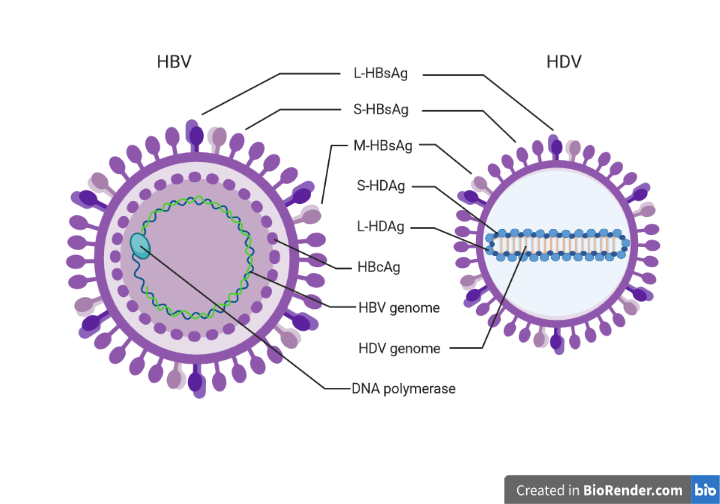
  • Ha solo due proteine (L-HDAg, S-HDAg), e per questo dipende quasi totalmente dalle proteine delle cellule umane
  • Può produrre nuove particelle virali e infettare altre cellule, solo in presenza di HBV
  • Il suo involucro esterno è costituito dalle proteine di superficie di HBV

Quest’ultima caratteristica è stata molto utile per prevenire la diffusione dell’infezione, dato che il vaccino contro HBV è altamente efficace anche contro HDV. Se siete nati in Italia negli anni ’80 come me, ricorderete di aver ricevuto il vaccino contro HBV quando frequentavate le scuole medie negli anni ’90, quando fu reso obbligatorio. La campagna vaccinale contro HBV ha avuto un grande successo, e ha contribuito fortemente alla riduzione dei casi di epatite delta in Italia, dove HDV era endemico ed è oggi prossimo all’eradicazione.

Nonostante ciò, si stima che globalmente circa 12 milioni di persone siano attualmente infettate con HDV, poiché in molte parti del mondo la copertura vaccinale è ancora bassa; il numero delle persone che hanno contratto il virus potrebbe essere però molto più alto, dato che in molti casi la diagnosi non viene eseguita. (Anche nei documenti relativi ai recenti casi di epatite acuta pediatrica ho letto spesso che i pazienti sono risultati negativi a HBV, HCV, HAV, HEV e “HDV nei casi in cui il test era disponibile”.)

Il fatto che HDV abbia solo due proteine proprie, e che per moltiplicarsi debba usare le proteine delle cellule umane, rende estremamente complicato sviluppare farmaci specifici contro il virus (per bloccarne la replicazione dovremmo bloccare le proteine delle cellule, con effetti collaterali potenzialmente gravi), e purtroppo, i trattamenti contro HBV non sono efficaci contro HDV.

Negli ultimi anni sono stati sviluppati nuovi antivirali con meccanismi d’azione diversi per bloccare i vari passaggi dell’infezione da HDV che stanno dando risultati promettenti negli studi clinici. In particolare due nuovi farmaci che bloccano rispettivamente l’ingresso di HBV e HDV nelle cellule nel fegato, o la formazione di nuove particelle infettive di HDV, hanno ottenuto un’approvazione condizionale (prima della fine degli studi clinici perché I beniefici superano chiaramente i rischi) nell’Unione Europea e negli Stati Uniti.

Nonostante HDV sia stato scoperto 45 anni fa (nel 1977 in Italia dal Prof. Mario Rizzetto), ancora oggi ci sono tantissime cose che non sappiamo su come causi la malattia, e soprattutto non abbiamo ancora una cura specifica per combatterlo. Il fatto che questo virus sia più diffuso in aree economicamente meno sviluppate ha reso l’epatite delta per molti anni una malattia negletta (trascurata, dimenticata).

L’approvazione condizionale dei nuovi farmaci fa ben sperare per un miglioramento delle condizioni di vita dei pazienti, ma c’è ancora tanto da fare: la ricerca deve continuare per capire esattamente cosa succede nel fegato infettato dal virus, bisogna dare più visibilità alla malattia per incentivare la prevenzione e scoraggiare i comportamenti a rischio, e sono necessarie più risorse per garantire una corretta diagnosi in tutti i casi sospetti ed espandere la copertura vaccinale nei paesi in via di sviluppo.

Immagine creata su BioRender.com da Carla Usai (L-HDAg, S-HDAg: proteine di HDV ; S-HBsAG, M-HBsAg, L-HBsAg: proteine di superficie di HBV; HBcAg: proteina core di HBV). Figure non in scala.

Bibliografia:

Review article: emerging insights into the immunopathology, clinical and therapeutic aspects of hepatitis delta virus, Usai C et al., Alimentary Pharmacology and Therapeutics 2022 https://doi.org/10.1111/apt.16807

Pagina dell’Organizzazione Mondiale della Sanità sui casi di epatite acuta pediatrica https://www.who.int/emergencies/disease-outbreak-news/item/multi-country-acute-severe-hepatitis-of-unknown-origin-in-children

Design a site like this with WordPress.com
Get started