Le epatiti virali

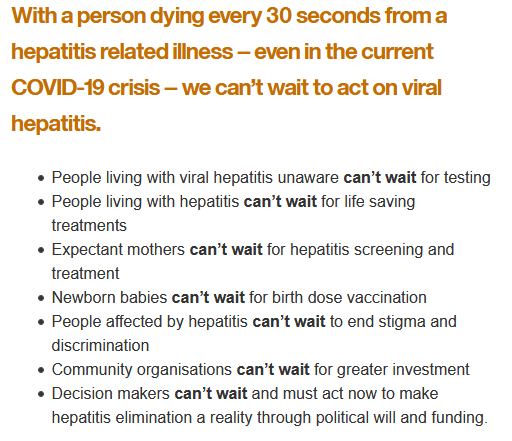
Sapevate che ogni anno 1.4 milioni di persone muoiono per le conseguenze dell’epatite virale? Si tratta di una vittima ogni 30 secondi.

Ogni anno il 28 luglio (il giorno del compleanno di Baruch Bloomberg, che scoprì il virus dell’epatite B) si celebra la Giornata Mondiale dell’Epatite per accendere i riflettori su questa malattia.

I virus che causano l’epatite sono cinque:

  • HBV e HCV (di cui ho parlato qui e qui), responsabili della stragrande maggioranza delle infezioni
  • HDV (il virus che studio in laboratorio, e di cui parlerò più a lungo in uno dei prossimi post)
  • HAV e HEV, che si trasmettono soprattutto tramite acqua contaminata e causano infezioni acute, spesso fatali

Negli anni ’90 vennero individuati altri due virus chiamati HFV e HGV; per ora solo l’esistenza di HGV (chiamato anche GBV-C) è stata confermata, ma non è chiaro se causi epatite nell’uomo.

Nonostante la disponibilità di vaccini efficace contro HAV, HBV e HDV, e di farmaci antivirali per la cura di HCV, circa 300 milioni di persone sono attualmente portatrici di questi virus, che danneggiano gravemente il fegato fino a causare il cancro.

Mentre altre malattie infettive come l’AIDS e la tubercolosi sono state oggetto di grandi investimenti negli ultimi anni, con un grande miglioramento delle condizioni di vita delle persone interessate, l’epatite è stata a lungo trascurata a discapito delle persone che ne soffrono.

Per questo il motto dell’edizione 2021 è “Hepatitis can’t wait”; l’epatite non può aspettare perché ci sono ancora tanti problemi irrisolti:

  • Milioni di persone sono infette senza saperlo, perché i test non sono accessibili a tutti.
  • In molti casi non si riesce ad evitare la trasmissione da madre a figlio durante la gravidanza.
  • Al giorno d’oggi non è possibile eliminare del tutto HBV dall’organismo dei pazienti infetti.
  • Siamo ancora alla ricerca di un farmaco per il trattamento di HDV, anche se ci sono molti studi clinici in corso con risultati promettenti.
  • Non esiste un vaccino per HCV.
  • Spesso le persone infette vengono stigmatizzate e discriminate, riducendo le loro possibilità di accedere alle cure e peggiorando ulteriormente la qualità della loro vita

Per tutti questi motivi l’organizzazione no-profit World Hepatitis Alliance, fondata e guidata da pazienti per i pazienti, sta lavorando al fianco di governi in tutto il mondo per aumentare la visibilità di questa malattia, suggerire strategie e promuovere attività per eliminare le epatiti virali entro il 2030.

Per saperne di più visitate il loro sito web https://www.worldhepatitisalliance.org/

Immagini da https://www.worldhepatitisday.org/

Bibliografia

https://www.worldhepatitisday.org/

https://www.who.int/news-room/events/detail/2021/07/28/default-calendar/world-hepatitis-day-2021

https://www.who.int/news-room/fact-sheets/detail/hepatitis-a

https://www.who.int/news-room/fact-sheets/detail/hepatitis-b

https://www.who.int/news-room/fact-sheets/detail/hepatitis-c

https://www.who.int/news-room/fact-sheets/detail/hepatitis-d

https://www.who.int/news-room/fact-sheets/detail/hepatitis-e

Hepatitis G virus, Reshetnyak V.I. et al., World journal of gastroenterology 2008 http://doi.org/10.3748/wjg.14.4725

Viral Hepatitis

Do you know that every year 1.4 million people worldwide die of viral hepatitis? It is one death every 30 seconds.

World Hepatitis Day takes place every year on July 28 (the day Baruch Bloomberg, the discoverer of Hepatitis B virus, was born) to raise awareness on this disease.

Five viruses cause hepatitis:

  • HBV e HCV (you can read my posts about them here and here), responsible for the great majority of hepatitis cases worldwide
  • HDV (the virus I study in the lab, I will write a post about it very soon)
  • HAV and HEV, transmitted through contaminated food and water, cause often fatal acute infections

In the 90s, two other viruses called HFV and HGV were identified; only HGV existence has been confirmed to date (also known as GBV-C), but it is unclear whether it causes hepatitis in humans.

Despite the availability of effective vaccines against HAV, HBV, and HDV, and of antivirals for the treatments of HC, about 300 million people are currently infected by these viruses, which severely damage the liver and can cause cancer.

While other infectious diseases like AIDS and tuberculosis have been the target of big investment during recent years, leading to a significant improvement in the life of infected people, viral hepatitis has been long neglected.

This is why the motto of World Hepatitis Day 2021 is “Hepatitis can’t wait”, there are too many unresolved problems:

  • Millions of people are unaware of their infection because tests are not accessible to everyone
  • In many cases mother-to-child transmission is not preventable during pregnancy
  • To date, it is not possible to eliminate HBV from the liver of infected patients
  • There are no antivirals against HDV, but the results of ongoing clinical trials are very promising
  • There is no vaccine against HCV
  • Infected people are often stigmatised and discriminated against, reducing their chances to have access to treatment and worsening the quality of their lives.

For all these reasons, the no-profit organisation World Hepatitis Alliance, founded and led by patients for the patients, works with the governments of many countries to raise awareness, influence policy change, and drive action, to eliminate viral hepatitis by 2030. Find out more at https://www.worldhepatitisalliance.org/

Images from https://www.worldhepatitisday.org/

Bibliography

https://www.worldhepatitisday.org/

https://www.who.int/news-room/events/detail/2021/07/28/default-calendar/world-hepatitis-day-2021

https://www.who.int/news-room/fact-sheets/detail/hepatitis-a

https://www.who.int/news-room/fact-sheets/detail/hepatitis-b

https://www.who.int/news-room/fact-sheets/detail/hepatitis-c

https://www.who.int/news-room/fact-sheets/detail/hepatitis-d

https://www.who.int/news-room/fact-sheets/detail/hepatitis-e

Hepatitis G virus, Reshetnyak V.I. et al., World journal of gastroenterology 2008 http://doi.org/10.3748/wjg.14.4725

Quanto tempo durano gli anticorpi dopo un’infezione da SARS-CoV-2?

Quanto tempo durano gli anticorpi dopo un’infezione da SARS-CoV-2?

Tutte le persone che si infettano producono la stessa quantità di anticorpi?

Da cosa possono dipendere eventuali differenze?

Per rispondere a queste domande, abbiamo analizzato 2001 lavoratori di tre ospedali londinesi  tra la prima e la seconda ondata della pandemia nel Regno Unito. I tre ospedali in questione si trovano nella zona Est di Londra, caratterizzata da una popolazione eterogenea dal punto di vista etnico, che ci ha permesso di studiare eventuali differenze tra individui di diversa origine.

Abbiamo utilizzato un test rapido per determinare la presenza o assenza di anticorpi contro la proteina N (o Nucleoproteina) di SARS-CoV-2, e ne abbiamo confermato i risultati con un test quantitativo in grado di misurare il livello di questi anticorpi nel sangue dei partecipanti. Nessuno di loro era positivo al virus o presentava sintomi quando è stato eseguito il test.

All’inizio della pandemia, erano state individuate caratteristiche che rappresentavano un rischio per una malattia più grave in seguito all’infezione con SARS-CoV-2: sesso maschile, età avanzata, etnia Asiatica e Afro-Americana, problemi cardio-vascolari, obesità e diabete.

Per capire se questi fattori fossero rilevanti anche per la produzione di anticorpi, abbiamo diviso i partecipanti al nostro studio in gruppi in base a

  • sesso
  • età
  • etnia di origine (in base alla lista ufficiale del governo del Regno Unito: asiatica, bianca, nera, mista, altro)
  • presenza di altre malattie
  • presenza di sintomi specifici di COVID-19 nei mesi precedenti (febbre, tosse, perdita dell’olfatto e del gusto)

Abbiamo anche preso in considerazione il tipo di mansione lavorativa svolta in ospedale dai nostri partecipanti, dividendo quelli che erano stati a diretto contatto con pazienti con COVID-19 durante la prima ondata della pandemia nel Regno Unito (prima linea), da quelli avevano svolto mansioni che non prevedono un contatto diretto con pazienti infetti (non in prima linea).

All’inizio dello studio (estate 2020) circa un quarto dei lavoratori analizzati era positivo agli anticorpi anti-N (506 su 2001). I gruppi con una maggiore percentuali di positivi erano: uomini tra 48 e i 67 anni, individui di etnia asiatica o nera, e lavoratori in prima linea. In generale, la percentuale di uomini con anticorpi era maggiore della percentuale di donne con anticorpi, per qualsiasi fascia d’età.

Quando abbiamo misurato la quantità di anticorpi nel sangue dei nostri volontari abbiamo trovato che gli individui tra 48 e 77 anni avevano anticorpi più abbondanti rispetto agli individui più giovani, e che i volontari di origine asiatica avevano una quantità di anticorpi maggiore rispetto agli individui appartenenti agli altri gruppi etnici. Anche le persone con ipertensione, diabete e obesità avevano livelli di anticorpi più alti rispetto alle persone senza queste patologie.

Per quanto riguarda la presenza di sintomi specifici di COVID-19 nei mesi precedenti al test, quelli con almeno un sintomo avevano livelli di anticorpi più alti, soprattutto se i sintomi avevano avuto una durata maggiore di 11 giorni.

545 partecipanti sono stati sottoposti al test degli anticorpi a tre mesi di distanza dalla prima misurazione (autunno 2020). Circa 1 su 3 di quelli che erano positivi ai nostri test all’inizio dello studio non aveva più anticorpi nel sangue, e in generale c’era stata una diminuzione nella quantità di anticorpi nel sangue di tutti i partecipanti, anche quelli ancora positivi. I livelli erano diminuiti di un terzo rispetto alla prima misurazione fatta tre mesi prima. I volontari che appartenevano alle categorie a rischio di sviluppare una malattia più grave in seguito all’infezione da SARS-CoV-2 (anziani, neri o asiatici, e ipertesi) avevano anche livelli più alti e più duraturi di anticorpi nel sangue.

Sia i lavoratori in prima linea che quelli non in prima linea avevano perso circa un terzo dei loro anticorpi nei tre mesi trascorsi tra la prima e la seconda misurazione.

Ancora non è chiaro esattamente perché alcune etnie e fasce d’età sviluppino una malattia più grave, e che implicazione abbiano gli alti livelli di anticorpi nel sangue. In particolare, gli anticorpi anti-N non sono in grado di bloccare il virus, mentre lo sono gli anticorpi anti-Spike (S), che hanno un andamento simile nel tempo.

I risultati di questo studio che abbiamo condotto a Londra, sono molto simili ai risultati di altri studi che hanno coinvolto un gran numero di persone in diverse parti del mondo. Anche gli anticorpi contro la proteina S diminuiscono nel tempo, con una velocità che dipende dalla gravità dell’infezione. Nel caso di sintomi lievi o moderati, gli anticorpi anti-S spariscono dopo circa 5 mesi. In base ai risultati ottenuti da tutti gli studi effettuati finora, è evidente che la vaccinazione è importante anche per coloro che sono stati infettati in passato, perché previene che i loro anticorpi svaniscano del tutto dopo qualche mese.

Anche se ancora non sappiamo con certezza se una persona può infettarsi più volte con SARS-CoV-2, sappiamo che ciò accade con altri coronavirus, perché gli anticorpi che produciamo contro di essi svaniscono in 6-12 mesi. Abbiamo visto che qualcosa di simile accade anche per gli anticorpi contro SARS-CoV-2.

Tenere sotto controllo il livello di anticorpi permette di capire che rischio ci sia di essere infettati dal virus. Inoltre, i vaccini che sono stati approvati finora stimolano la produzione di anticorpi solo contro la proteina S, mentre gli anticorpi contro la proteina N vengono prodotti solo nel caso di infezione. Differenziare tra questi due anticorpi permette di individuare un nuovo focolaio di infezione (se ci sono individui con anticorpi anti-N), e di stabilire se e quando è necessario effettuare un richiamo del vaccino (quando i livelli di anticorpi anti-S iniziano a svanire).

Immagine “COVID Antibody Testing at Mahaffey Theater” di CityofStPete su licenza CC BY-ND 2.0

Bibliografia

Disparities of SARS-CoV-2 Nucleoprotein-specific IgG in healthcare workers in East London, UK, Choudhry N, Drysdale K, Usai C et al., Frontiers in Medicine 2021, http://doi.org/10.3389/fmed.2021.642723

How long do anti- SARS-CoV-2 antibodies last?

How long do anti- SARS-CoV-2 antibodies last?

Do we all produce the same amount of antibodies after the infection?

If not, why?

To answer these questions, we analysed 2001 healthcare workers from three hospitals in London, between the first and the second waves of the pandemic in the United Kingdom. These hospitals are in East London, an area very rich in ethnic diversity, which allowed us to study potential differences between people of different origins.

We used a rapid test to determine the presence or absence of antibodies against the N protein (Nucleoprotein) of SARS-CoV-2, and we confirmed those results with a quantitative test that also determines the amount of the antibodies in the blood of the participants to our study. None of them was positive to the virus or experiencing symptoms when antibodies were tested.

At the beginning of the pandemic, doctors found that people with some characteristics were more at risk of having a severe disease after the infection with SARS-CoV-2, namely being male, older, of Asian or Black ethnicity, having cardiovascular diseases, obesity or diabetes.

To understand whether these characteristics were also important for antibody production, we divided the participants to our study into groups according to:

  • sex
  • age
  • ethnicity (based on the official list of ethnic groups by the government of the United Kingdom: Asian, Black, White, Mixed, Other)
  • other diseases
  • COVID-19 specific symptoms in the months before the antibody test (fever, cough, loss of smell or taste)

We also took into account the kind of tasks the participants of our study had in the hospital, dividing those who had been in direct contact with COVID-19 patients during the first wave of the pandemic (frontline) from those who had not been in contact with infected patients (non-frontline).

At the beginning of the study (Summer 2020), about one fourth of the healthcare workers we analysed had antibodies against N (506 out of 2001). The groups with a higher percentage of antibody positives were: males 48 to 67 years old, of Asian or Black ethnicity, and frontline workers. In general, the percentage of antibody-positive males was higher than antibody-positive females of any age.

When we measured the amount of antibodies in the blood of our volunteer participants, we found that individuals 48 to 77 years old had more antibodies than younger individuals and that those of Asian origin had more antibodies than participants from any other ethnic background. People with hypertension, diabetes, and obesity, had higher antibody levels than people without these diseases.

Regarding the presence of COVID-19 specific symptoms during the previous months, those with at least one symptom had greater antibody amounts, especially if symptoms had lasted more than 11 days.

545 participants were tested again after three months since the first test (Autumn 2020). About 1 out of 3 of those who were antibody positive at the beginning of our study, did not longer have antibodies in their blood, and, in general, all participants had fewer antibodies in their blood, including those still antibody positives. They had lost one third of their antibodies since the first measurement, made three months earlier. Participants with a higher risk of a severe disease after SARS-CoV-2 infection (older, Black or Asian, with hypertension), also had higher and longer-lasting levels of antibodies.

Both frontline and non-frontline workers had lost about one third of their antibodies during the three months between the first and the second test.

It is not yet clear why some ethnicities and age ranges have severe disease, and what is the real meaning of having more antibodies in the blood. In particular, antibodies against N are not able to block the virus, as opposed to antibodies against the Spike protein (S), which also diminish with time.

The results of this study we conducted in London, are very similar to other studies that involved a huge number of people all over the world. Antibodies against S also decline with time, and how long they last depends on the severity of the infection. If symptoms were mild, anti-S antibodies vanish in about 5 months. Based on all these studies, it is clear that vaccination is very important also for those people infected by the virus in the past because the vaccine prevents their antibodies to completely disappear after a few months.

Even if we don’t know for sure if SARS-CoV-2 can infect the same person more than once, we know that this is what happens with others coronaviruses, because the antibodies we produce against them vanish in 6-12 months. We have found that something similar occurs also for the antibodies against SARS-CoV-2.

Monitoring the levels of our antibodies helps us understand if we are at risk of being infected by the virus. Moreover, all the vaccines currently in use, make us produce only antibodies against S, while antibodies against N are produced only in case of infection. If we measure both types of antibodies, we can identify a new infection outbreak (if there are people with anti-N antibodies), and decide if and when another dose of the vaccine is necessary (when anti-S antibodies begin to wane).

Image “COVID Antibody Testing at Mahaffey Theater” by CityofStPete is licensed under CC BY-ND 2.0 

Bibliography

Disparities of SARS-CoV-2 Nucleoprotein-specific IgG in healthcare workers in East London, UK, Choudhry N, Drysdale K, Usai C et al., Frontiers in Medicine 2021, http://doi.org/10.3389/fmed.2021.642723

HCV: un virus che sfugge al sistema immunitario

Il virus dell’epatite C (HCV) fu scoperto negli anni ’80 grazie a studi condotti da Harvey J. Alter, Michael Houghton e Charles M. Rice, a cui è stato conferito congiuntamente il Premio Nobel per la Medicina e Fisiologia nel 2020.

Prima della sua identificazione, erano noti altri due virus capaci di infettare il fegato, chiamati virus dell’epatite A e B (HAV, HBV), ma moltissimi casi di malattie del fegato con caratteristiche simili non erano ascrivibili a nessuno dei due, non avevano una causa certa, e venivano per questo definiti “non-A non-B”.

Secondo dati dell’Organizzazione Mondiale della Sanità, 71 milioni di persone nel mondo sono attualmente affette da un’infezione cronica da HCV, con una maggiore prevalenza in Europa e Medio Oriente. Nel solo anno 2015 ci sono stati 1.75 milioni di nuove infezioni, e nel 2016 sono state registrate 399.000 morti dovute alle conseguenze di questa infezione. Poiché la via di trasmissione è simile per HCV, HBV e HIV, la co-infezione da parte di combinazioni di questi virus è abbastanza diffusa.

HCV è un virus a RNA della famiglia dei Flaviviridae; ne esistono 8 genotipi differenti tra loro per il 30% della sequenza, e che possono influenzare sia la gravità della patologia che la risposta al trattamento. Il genoma virale codifica per 10 proteine, molte delle quali contribuiscono all’evasione del virus dal controllo del sistema immunitario. Il virus dell’epatite C infetta unicamente l’uomo e lo scimpanzé e si riproduce molto velocemente: dopo pochi giorni dall’inizio dell’infezione si possono rilevare fino a 1 milione di particelle virali per ml di sangue (considerando che un individuo adulto ha circa 6 litri di sangue, ciò corrisponde a un totale di 6 miliardi di particelle virali).

Questo virus si trasmette tramite contatto con sangue contaminato (anche piccolissime quantità) e infetta il fegato causando un’infezione acuta o cronica. La cronicità è dovuta alla capacità del virus di passare inosservato per molto tempo senza causare sintomi, e di sfuggire alle difese immunitarie sia accumulando mutazioni in punti strategici, sia inibendo l’attività di alcune cellule del sistema immunitario.

Una delle strategie del virus per sfuggire alla risposta immunitaria consiste nel mutare frequentemente le proteine più esposte sulla sua superficie (E1 e E2), rendendole così difficilmente riconoscibili da parte degli anticorpi. Inoltre il virus produce grandissime quantità di particelle subvirali, immensamente più numerose delle particelle virali vere e proprie, costituite dal solo involucro esterno ma prive del genoma e incapaci di replicarsi che fungono da esca per gli anticorpi. Anche per questo motivo, nonostante HCV sia noto da oltre 30 anni, non è ancora stato possibile sviluppare un vaccino preventivo efficace.

Solo il 30% delle persone con un’infezione acuta da HCV manifestano sintomi (malessere, dolore addominale, colorazione scura delle urine, edema degli arti inferiori, itterizia – colorazione gialla di pelle, mucose e occhi). Durante le prime settimane dell’infezione i linfociti T vengono reclutati nel fegato, dove uccidono le cellule infettate e producono una sostanza chiamata Interferone gamma che inibisce la replicazione del virus, riuscendo nel 30% dei casi a mettere fine all’infezione. In questa fase, il 90% dei pazienti con una diagnosi di epatite C può essere curato con un trattamento a base di Interferone alfa.

La pericolosità di questo virus sta nella capacità di non causare sintomi nel 70% dei casi: l’infezione non viene diagnosticata e progredisce diventando cronica. Solitamente, se l’infezione cronicizza, l’organismo perde la capacità di eliminare il virus spontaneamente nonostante continui a produrre interferone gamma; in questa fase anche il trattamento con interferone alfa diventa inefficace. Il virus continua a replicarsi sfuggendo all’azione del sistema immunitario. Sia la replicazione del virus che l’attivazione del sistema immunitario, contribuiscono all’infiammazione del fegato e alla patologia associata. Come nel caso del virus dell’epatite B, un’infezione cronica di questo tipo danneggia gravemente il fegato, causando nel tempo cirrosi e epatocarcinoma (cancro al fegato).

Oltre a caratteristiche proprie del virus, anche variazioni specifiche in alcuni geni del sistema immunitario umano possono rendere un individuo più o meno suscettibile a sviluppare un’infezione cronica e a rispondere alle cure.

Recentemente è stata messa a punto una terapia antivirale basata sui cosiddetti DAA, direct-acting antivirals, che risulta efficace nel 95% dei casi e su tutti i genotipi virali; l’accesso alla cura non è però ampiamente diffuso, sia a causa dei costi elevati, sia perché in molti casi l’infezione non viene diagnosticata.

Purtroppo non esiste un vaccino capace di prevenire l’infezione da parte di HCV; ciò è dovuto all’ampia variabilità genetica del virus (8 genotipi e 90 subtipi), ma anche all’assenza di modelli animali che facilitino lo studio del virus e la sperimentazione di vaccini e trattamenti.

Gli unici strumenti a nostra disposizione per prevenire la diffusione di questo virus sono lo screening dei donatori di sangue, la corretta manipolazione e smaltimento di materiale per iniezioni, tatuaggi, piercing a agopuntura, e l’evitare il contatto con quantità anche minime di sangue.

Immagine: ”Hepatitis C.jpg” da http://www.scientificanimations.com con licenza CC BY-SA 4.0.

Bibliografia

Nobel Prize in Physiology or Medicine 2020 https://www.nobelprize.org/prizes/medicine/2020/press-release/

World Health Organisation https://www.who.int/news-room/fact-sheets/detail/hepatitis-c

European Centre for Disease Prevention and Control https://www.ecdc.europa.eu/en/hepatitis-c/facts

The hunt for a vaccine for hepatitis C virus continues, Editorial of The Lancet Hepatology and Gastroenterology 2021, https://doi.org/10.1016/S2468-1253(21)00073-X

Innate immunity and HCV, M.H. Heim, Journal of Hepatology 2013, https://doi.org/10.1016/j.jhep.2012.10.005

Hepatitis C Virus Infection: Host–Virus Interaction and Mechanisms of Viral Persistence, D.I. Chigbu et al, Cells 2019,  https://doi.org/10.3390/cells8040376

HCV: a virus able to elude the immune system

The Hepatitis C Virus (HCV) was discovered in the 80s thanks to the work of Harvey J. Alter, Michael Houghton, and Charles M. Rice, who jointly received the Nobel Prize in Physiology or Medicine in 2020.

Before that, two other viruses called Hepatitis A virus and Hepatitis B virus (HAV, HBV) were known to infect the human liver, but many cases of liver disease with similar characteristics were not due by either of them, did not have a known cause, and were therefore defined as “non-A non-B”.

According to the World Health Organization, 71 million people in the world have an HCV chronic infection, with a higher prevalence in Europe and the Middle East. In 2015 alone, there were 1.75 million new infections, and in 2016, 399.000 death caused by the consequences of this infection were registered. Since HCV, HBV, and HIV share the same mode of transmission, co-infection by combinations of these three viruses is common.

HCV is an RNA virus belonging to the Flaviviridae family, with 8 genotypes differing by 30% of their sequence, which can influence both the severity of the pathology and the reaction to treatment. The viral genome encodes 10 proteins, several of which are involved in the virus immune evasion. Hepatitis C Virus exclusively infects humans and chimpanzees and replicates very quickly: within days since the beginning of the infection, 1 million viral particles can be detected per ml of blood (taking into account that an adult has about 6 liters of blood, it can host 6 billion viral particles in total).

This virus can be transmitted through contact with contaminated blood (including very small amounts) and infects the liver causing either an acute or chronic infection. Chronicity is achieved by the viral ability to go unnoticed for a long time without any symptoms and to evade the immune defenses of the host by accumulating mutations, and inhibiting the activity of specific cell types of the immune system.

One of the viral mechanisms to evade the immune response consists in mutate very often the proteins of its surface (E1 and E2), making them hardly recognizable by the antibodies. Moreover, the virus produces huge amounts of subviral particles,that are made of the external viral envelope but don’t carry any genome and are incapable of replication, outnumber the proper viral particles, and act as decoys for neutralizing antibodies. This is one of the reasons why, despite HCV has been known for more than 30 years, an effective preventive vaccine is not yet available.

Only 30% of the acute HCV infections are symptomatic (malaise, abdominal pain, dark urine, edema of lower extremities, jaundice – yellow skin, mucosae, and eyes). During the first weeks of the infection, T cells are recruited to the liver where they kill the infected cells and produce Interferon gamma, a molecule that inhibits viral replication, ending the infection in 30% of cases. In this early phase, 90% of patients with an HCV diagnosis can be cured with an Interferon alpha-based treatment.

The dangerousness of this virus lies in its ability to not causing any symptom in 70% of cases: the infection cannot be diagnosed and it progresses to chronicity. Usually, if the infection becomes chronic, the organism is no longer able to spontaneously get rid of the virus, despite a continuous production of Interferon gamma; in this phase, even the Interferon alpha treatment becomes ineffective. The virus keeps replicating and eludes the immune system. Both the viral replication and the immune system activation contribute to the inflammation of the liver and to the associated pathology. As for HBV, a chronic HCV infection severely damages the liver and leads to cirrhosis and hepatocarcinoma (liver cancer).

In addition to viral characteristics, there are specific variations in human genes involved in the immune response, that can determine whether an individual is more or less susceptible to develop a chronic infection, and to respond to treatment.

Recently, a new antiviral therapy has been developed, based on the so-called DAA, direct-acting antivirals; it is efficient in 95% of cases and with all genotypes. However, access to treatment is not broadly available, in part because of its cost, and in part because in many cases the infection is not diagnosed.

Unfortunately, there is no vaccine available to prevent HCV infection; this is due to the great genetic variability of the virus, but also to the lack of animal models for the experimental study of this virus and its vaccines and treatments.

The only measures we have to limit HCV spread are the screening of all blood donors, the correct handling and disposal of tools for injections, tattooing, piercing, and acupuncture, and the avoidance of any contact with even small amounts of blood.

Image: “Hepatitis C.jpg” by http://www.scientificanimations.com is licensed with CC BY-SA 4.0.

Bibliography

Nobel Prize in Physiology or Medicine 2020 https://www.nobelprize.org/prizes/medicine/2020/press-release/

World Health Organisation https://www.who.int/news-room/fact-sheets/detail/hepatitis-c

European Centre for Disease Prevention and Control https://www.ecdc.europa.eu/en/hepatitis-c/facts

The hunt for a vaccine for hepatitis C virus continues, Editorial of The Lancet Hepatology and Gastroenterology 2021, https://doi.org/10.1016/S2468-1253(21)00073-X

Innate immunity and HCV, M.H. Heim, Journal of Hepatology 2013, https://doi.org/10.1016/j.jhep.2012.10.005

Hepatitis C Virus Infection: Host–Virus Interaction and Mechanisms of Viral Persistence, D.I. Chigbu et al, Cells 2019,  https://doi.org/10.3390/cells8040376

Mutazioni, varianti e quasispecie: la microevoluzione dei virus

Perché i virus mutano? In realtà la domanda che dovremmo porci è: come mutano i virus?

I virus non sono esseri pensanti che agiscono secondo una strategia, non decidono se mutare o come mutare, e quando ciò accade è il risultato che determina se la mutazione sopravviverà nel tempo e non viceversa. Questo è valido per tutti i virus, non solo per SARS-CoV-2.

Le mutazioni non sono nient’altro che errori casuali che possono avvenire durante la replicazione del materiale genetico di un virus o di qualunque altro microorganismo o cellula (incluse cellule del nostro corpo). Per quanto riguarda i virus, le mutazioni sono più frequenti in quelli che hanno un genoma fatto di RNA (come i coronavirus) che in quelli con un genoma di DNA.

L’RNA è una catena di molecole indicate con le lettere A, U, C e G. Durante la replicazione, questa sequenza viene copiata da un macchinario (enzima) prodotto dal virus stesso, chiamato RNA polimerasi che, seppur efficientissimo, commette degli errori introducendo una lettera sbagliata 1 volta su un milione. Il numero di errori commesso, e quindi di mutazioni, sarebbe circa 100 volte più alto se l’enzima dei coronavirus non avesse una attività di correzione di bozze: può fermarsi a rileggere quello che ha appena copiato e correggere eventuali errori. Ciononostante, alcune mutazioni sfuggono alla correzione. (Il risultato è che i coronavirus mutano meno frequentemente di altri virus a RNA.)

Tutto ciò accade ogni qualvolta il virus si replica nelle nostre cellule (circa ogni 10 ore per ogni particella virale); considerando che un singolo individuo può ospitare miliardi di particelle virali, la quantità di mutazioni che possono essere introdotte è enorme. Per questo in ogni singolo momento durante un’infezione virale, un organismo contiene molte versioni dello stesso virus, alcune più abbondanti di altre, e non tutte necessariamente uguali alle quelle che hanno dato il via all’infezione. Questa popolazione variegata è chiamata quasispecie virale.

Molte delle mutazioni che si originano durante la replicazione non hanno nessun effetto sull’attività del virus, altre invece possono essere vantaggiose per il virus o per l’ospite, e da ciò dipenderà il loro futuro. Se una mutazione è svantaggiosa per il virus, per esempio rende più difficile la replicazione, quella sequenza verrà copiatà sempre meno finché quella specifica versione del virus con quella mutazione verrà perso (è come se la mutazione morisse con il virus).

Se una mutazione è vantaggiosa per il virus, per esempio perché gli consente di entrare nelle cellule più facilmente o di replicarsi più velocemente, ci saranno molte più particelle virali con quella mutazione, che a loro volta la trasmetteranno alle generazioni successive. In casi come questi si dice che la mutazione si fissa nel genoma.

Il destino delle mutazioni che non hanno nessun effetto dipende spesso dalle altre mutazioni presenti nella stessa particella virale: se sono accompagnate da mutazioni vantaggiose avranno una maggiore probabilità di sopravvivere nel tempo, se invece sullo stesso genoma ci sono altre mutazioni svantaggiose per il virus, scompariranno con loro.

La selezione naturale agisce su tutti i genomi mutati, facendo sì che le sequenze che permettono una migliore performance del virus (migliore replicazione, resistenza ad alte temperature, migliore diffusione tra le cellule, resistenza agli anticorpi, adattamento a un nuovo ospite etc) vadano avanti (microevoluzione), quindi solo una piccola parte di tutte le mutazioni che si originano vengono propagate.

L’alta frequenza di mutazioni e l’eterogeneità delle popolazioni, soprattutto nel caso dei virus a RNA, può avere delle conseguenze sulla patogenicità virale e sul controllo delle malattie virali: varianti dello stesso virus possono avere una diversa virulenza (capacità di provocare la malattia). Nella maggior parte dei casi però una sola mutazione non è abbastanza per alterare la virulenza, quindi combinazioni di mutazioni specifiche in posizioni precise sono necessarie affinché ci sia un effetto significativo.

Ma attenzione: una mutazione vantaggiosa per il virus non è necessariamente pericolosa per l’uomo o viceversa. Molte mutazioni si fissano proprio perché consentono un migliore adattamento all’ospite, in poche parole il virus continua a replicarsi e a diffondersi causando malattie con sintomi sempre più lievi: in questo caso il vantaggio è per ambo le parti. Ricordiamoci che i virus sono programmati per replicarsi e diffondersi, causare la morte dell’ospite non è il loro obiettivo.

Ricapitolando, la parola mutazione indica un cambiamento in una determinata posizione della sequenza, mentre una variante è una sequenza che differisce dalla sequenza di riferimento (per esempio la prima ad essere stata caratterizzata o la più abbondante) per una o più mutazioni.

Prendiamo per esempio la cosiddetta variante inglese. Il nome corretto è B.1.1.7, ed è caratterizzata da 17 mutazioni, di cui 8 nella proteina Spike (S). Questa variante venne individuata a Settembre 2020 nel sud dell’Inghilterra, quando ci si rese conto che in alcuni campioni il test della PCR riconosceva solo una delle due porzioni della sequenza del virus. In seguito a questa osservazione si scoprì che una delle due porzioni bersaglio della PCR era mutata rispetto alla sequenza originale su cui era stato progettato il test.

 Probabilmente queste mutazioni si sono accumulate in un individuo immuno-compromesso in cui il virus ha avuto modo di replicare indisturbato per mesi, mutando più volte e fissando molte mutazioni (comprese quelle non vantaggiose).

Alcune mutazioni presenti nella proteina Spike della variante inglese permettono al virus di entrare più facilmente nelle cellule umane. Ciò ha permesso a questa variante di diffondersi rapidamente nel Regno Unito: nel gennaio 2021 venne individuata nel 70% delle nuove infezioni riscontrate a Londra. Altre mutazioni di questa variante coinvolgono altri geni del virus, e non sembrano conferire nessun vantaggio evidente.

La preoccupazione iniziale riguardo questa variante era dovuta alle mutazioni nella proteina Spike, che si temeva potessero conferire resistenza agli anticorpi prodotti in seguito alla vaccinazione (Spike è il bersaglio di tutti i vaccini approvati). Dagli studi condotti sinora risulta però che tutti i vaccini in uso garantiscono un certo livello di protezione sia nei confronti della variante inglese che delle altre varianti oggetto di studio. Questo perché la vaccinazione induce la produzione di anticorpi che riconoscono tante porzioni diverse della proteina Spike, non solo quelle mutate. I vaccini potrebbero non conferire una immunità totale contro tutte le varianti, ma faranno in modo che la malattia abbia sintomi molto più lievi. Nel caso in cui vengano individuate mutazioni capaci di far diminuire drasticamente l’efficacia dei vaccini, le tecnologie a disposizione permetteranno di ottimizzarli o di progettare dei richiami per aggirare l’ostacolo.

Cosa possiamo fare per evitare che emergano nuove varianti di SARS-CoV-2? L’unica strategia è rendere difficile la vita al virus rallentandone la diffusione, in modo che possa replicarsi il meno possibile e mutare ulteriormente, tramite gli accorgimenti che già conosciamo: distanze, mascherine, igiene ma soprattutto la vaccinazione!

Immagine: “Coronavirus Close Up Image” di danielfoster437 con licenza CC BY-NC-SA 2.0.

Bibliografia

Viral quasispecies, Domingo E. et al., PLOS Genetics 2019, https://doi.org/10.1371/journal.pgen.1008271

Thinking Outside the Triangle: Replication Fidelity of the Largest RNA Viruses, Clinton Smith E. et al., Annual Review of Virology 2014, http://doi.org/10.1146/annurev-virology-031413-085507

SARS-CoV-2 (COVID-19) by the numbers, Bar-On et al., eLife 2020, http://doi.org/10.7554/eLife.57309

Understanding the variants of SARS-CoV-2, Burki T., The Lancet 2021 https://doi.org/10.1016/S0140-6736(21)00298-1

Genetic Variants of SARS-CoV-2—What Do They Mean?, Lauring SA et al., JAMA 2021 https://doi.org/10.1001/jama.2020.27124

https://www.who.int/news-room/feature-stories/detail/the-effects-of-virus-variants-on-covid-19-vaccines

https://www.cdc.gov/coronavirus/2019-ncov/transmission/variant.html

Mutations, variants and quasispecies: the microevolution of viruses

Why do viruses mutate? Actually, the question we should ask is: how do viruses mutate?

Viruses are not consciously thinking beings that pursue a strategy, they do not decide to mutate or how to mutate, and when this happens, it is the result of the mutation to determine whether it will persist in time, and not the other way around. This is true for all viruses, not only for SARS-CoV-2.

Mutations are random errors that can happen during the replication of the genetic material of either a virus or any other microorganism or cell (including the cells in our body). When it comes to viruses, mutations are more frequent in those with RNA genomes (like the coronaviruses) than in those with a DNA genome.

RNA is a chain of molecules indicated by the letters A, U, C e G. Duringreplication, this sequence is copied by a machinery (enzyme) produced by the virus itself, the RNA polymerase, that although very efficient, can make mistakes introducing the wrong letter (mutation) with a probability of 1 in 1million. This probability would be 100 times greater if the coronavirus enzyme did not have a proofreading activity: it can stop and read what it has just copied and correct possible mistakes. However, some mistakes escape the correction. (As a result, coronaviruses mutate less frequently than other RNA viruses).

This happens every time the virus replicates in our cells (about every 10 hours for each viral particle); considering that each infected person may have billions of viral particles, it is clear that the amount of mutations that can possibly appear during an infection is huge. For this reason, at any given moment during a viral infection, a person hosts many different versions of the same virus, some of them more abundant than others, and not all of them are necessarily identical to those that had started the infection. This assorted population is called viral quasispecies.

Most mutations do not have any effect on the viral activity, while others may represent either an advantage or a disadvantage for the virus or the host, and their future depends on that. If a mutation is a disadvantage for the virus, for example because it impairs replication, that sequence of RNA will be copied lesser and lesser until that specific version of the virus with that mutation will eventually disappear (it is like the mutation will die with the virus).

If a mutation is an advantage for the virus, for example, because it allows it to enter the cells much easier or improves replication, there will be more and more viral particle with that mutation, that in turn will pass it to the next viral generations. In this case, we say that the mutation has been fixed in the genome.

The future of a mutation that does not have any effect often depends on the other mutations present in the same viral particles: if they are linked to beneficial mutations they will have a higher probability to survive in time, on the other hand, if they are in the same sequence with unfavourable mutations, they will most probably disappear.

Natural selection acts on all mutated genomes, in a way that those sequences that allow a better viral performance (better replication, high-temperature resistance, better or faster spreading, resistance to antibodies, adaptation to a new host) will survive (microevolution); indeed, only a small fraction of all mutations will proliferate.

The high mutation frequency and the heterogeneity of viral populations, especially for RNA viruses, can affect the pathogenicity and the control of viral diseases: variants of the same virus can have a different virulence (ability to cause disease). In most cases, however, one single mutation is not enough to alter virulence, and a combination of specific mutations in specific positions must occur to cause a significant effect.

But be aware that a mutation that is favourable for the virus is not necessarily dangerous for humans. Many mutations become fixed in the genome because they allow a better adaptation to the host, meaning that the virus can replicate and spread causing milder disease: in this case the advantage is for both the virus and the host. Don’t forget that viruses are biologically set to replicate and spread, and kill the host is not their function.

In summary, a mutation is a change in a specific position of the sequence, while a variant is a sequence that differs from the reference (the first to be characterized, ore the most abundant) for one or more mutations.

Let’s consider the so-called English variant. Its proper name is B.1.1.7, and it is characterized by 17 mutations, 8 of them in the Spike protein (S). This variant was detected in September 2020 in the South of England, when it was realized that the PCR test was able to recognize only 1 out of 2 portions of the virus sequence in some samples. Following this observation, it was discovered that one of the two target portions was mutated and different from the original sequence used to design the test.

These mutations had probably originated in an immune-compromised patient, in which the virus was able to replicate undisturbed for months, mutating several times and fixing many mutations (including those without a direct favourable effect).

Some mutations in the S protein allow the virus an easier entry into the human cells. This has allowed this variant to rapidly spread in the UK: in January 2021 it was detected in 70% of new infections in London. Other mutations of this variant involve other viral genes and do not confer any clear advantage to the virus.

The initial concern about this variant, was due to the mutation in the Spike protein because there was a fear that it could confer resistance to the antibodies produced after the vaccination (Spike is the target of all vaccines approved so far). However, the results of the studies conducted to date show that all the vaccines currently in use confer some level of protection to all the SARS-CoV-2 variants known at the moment. This is because the antibodies produced after vaccination recognize several portions of S, not only the mutated ones. The vaccines may not confer immunity to all of them, but they will protect from severe forms of the disease. If a new variant able to drastically impair the efficacy of the vaccine would appear, the technology will allow to optimize the vaccine or design a different second dose to overcome the problem.

What can we do to avoid new SARS-CoV-2 variants to emerge? The only strategy is to make it difficult for the virus to spread, this way it will have little chance to replicate and mutate. We already know how to do this: distance, masks, hygiene, and best of all vaccination!

Image: “Coronavirus Close Up Image” by danielfoster437 is licensed with CC BY-NC-SA 2.0.

Bibliography

Viral quasispecies, Domingo E. et al., PLOS Genetics 2019, https://doi.org/10.1371/journal.pgen.1008271

Thinking Outside the Triangle: Replication Fidelity of the Largest RNA Viruses, Clinton Smith E. et al., Annual Review of Virology 2014, http://doi.org/10.1146/annurev-virology-031413-085507

SARS-CoV-2 (COVID-19) by the numbers, Bar-On et al., eLife 2020, http://doi.org/10.7554/eLife.57309

Understanding the variants of SARS-CoV-2, Burki T., The Lancet 2021 https://doi.org/10.1016/S0140-6736(21)00298-1

Genetic Variants of SARS-CoV-2—What Do They Mean?, Lauring SA et al., JAMA 2021 https://doi.org/10.1001/jama.2020.27124

https://www.who.int/news-room/feature-stories/detail/the-effects-of-virus-variants-on-covid-19-vaccines

https://www.cdc.gov/coronavirus/2019-ncov/transmission/variant.html
Un anno di congressi online: pro e contro

Uno dei lati positivi di lavorare nel mondo della ricerca è (o meglio, era) quello di partecipare ai congressi, non solo per presentare il proprio lavoro e conoscere altri ricercatori, ma anche per viaggiare e visitare nuove città.

Da un anno a questa parte anche i congressi e le conferenze scientifiche che non sono state cancellate, sono state svolte in modalità online, un formato a cui pian piano ci stiamo abituando. Ma è davvero questo il futuro dei congressi? O un bel giorno torneremo a partecipare agli eventi in carne e ossa?

Come tutte le cose anche in questo caso ci sono vantaggi e svantaggi, che sono spesso due facce della stessa medaglia. Ecco una lista dei pro e contro dei congressi scientifici online secondo il mio punto di vista.

  1. Non è necessario viaggiare

PRO: ciò riduce i costi per i partecipanti, l’inquinamento dovuto ai trasporti, e il tempo necessario per raggiungere la sede del congresso.

CONTRO: si perde la possibilità di viaggiare e conoscere realtà diverse; molti congressi offrono borse di viaggio per dottorandi o per ricercatori provenienti da paesi economicamente svantaggiati che spesso non hanno altre occasioni per viaggiare all’estero.

2. Si può partecipare ai congressi da casa o dal proprio posto di lavoro

PRO: ci si guadagna dal punto di vista della flessibilità, seguendo una presentazione in background e allo stesso tempo dedicandosi a un’altra attività come preparare un grafico o occuparsi delle faccende domestiche.

CONTRO: è più probabile essere distratti o interrotti da altre persone; per alcuni (me compresa) è difficile mantenere la concentrazione a lungo davanti a uno schermo, quindi la presentazione, per quanto interessante, rischia di passare in secondo piano.

3. Molti congressi online mettono a disposizione i video delle presentazioni

PRO: questo è utilissimo se abbiamo perso una delle presentazioni a cui eravamo interessati perché siamo stati distratti da qualcuno o qualcosa, o perché più presentazioni erano programmate alla stessa ora in sessioni parallele.

CONTRO: se non eravamo motivatissimi a partecipare al congresso, potremmo trovarci a posticipare a non finire la visione delle presentazioni.

4. L’iscrizione a un congresso online è (in genere) più economica di quella dei congressi tradizionali

PRO: chi ha un budget limitato può partecipare a un numero più elevato di congressi rispetto a quanto sarebbe possibile con i congressi presenziali.

CONTRO: si può cadere nella tentazione di iscriversi a congressi a cui non si è realmente interessati, invogliati solo dalla convenienza della quota di iscrizione, per poi non seguire l’evento o non dedicargli la giusta attenzione (effetto Black Friday).

5. L’interazione con i relatori e gli altri partecipanti avviene solo attraverso lo schermo

PRO: Per i più timidi o introversi, che si troverebbero a disagio ad alzare la mano e fare una domanda davanti all’intero pubblico di un congresso, gli eventi online sono la giusta soluzione: si può disattivare la webcam, o porre le domande attraverso la chat.

CONTRO: Il relatore non vede (né sente) il proprio pubblico e non ha modo di capire se sta riuscendo a mantenere un adeguato livello di attenzione e di interesse (in fin dei conti ci si trova parlare da soli davanti al proprio computer).

6. Non ci sono (vere) pause con (finto) caffè e pasticcini

PRO: il caffè dei congressi non è noto per la sua qualità, si risparmiano i momenti di imbarazzo in cui più persone puntano l’ultimo pasticcino decente rimasto nel vassoio, e non si rischia di sentirsi a disagio avvicinandosi a ricercatori più esperti per fare domande sulla loro presentazione proprio mentre stanno addentano un tramezzino.

CONTRO: non c’è spazio per il networking. Anche se alcuni congressi online hanno delle chatroom appositamente dedicate, l’efficacia delle soluzioni tecnologiche è ben lontana da quella delle interazioni personali in carne ed ossa. Gli incontri informali associati ai congressi hanno un grande valore, e spesso hanno risvolti importanti dal punto di vista professionale. Nel mio caso, la partecipazione ai congressi internazionali ha costituito il trampolino di lancio per il mio post doc a Londra.

Per quanto mi riguarda, i congressi online non mi hanno ancora conquistato, un po’ perché non sono capace di mantenere la concentrazione a lungo davanti a uno schermo, e un po’ perché mi manca l’esperienza personale e umana dei congressi che spesso e volentieri costituiscono una piacevole (anche se impegnativa) evasione dalla routine. Partecipare ai congressi aiuta anche ad aumentare la sicurezza in sé stessi, permette di confrontarsi con ricercatori più esperti, e spesso e volentieri si torna a casa con delle idee e spunti per il proprio lavoro, nonché con nuovi contatti professionali che possono portare a collaborazioni e nuovi progetti.

Anche se gli eventi online hanno indubbiamente i loro vantaggi, spero che, una volta lasciataci alle spalle questa pandemia, possiamo tornare a godere dell’esperienza a tutto tondo dei congressi in presenza.

One year of online congresses: pros and cons

One of the positive aspects of working in academic research is (or at least was) participating in congresses, not only to present one’s own work and meet other scientists, but also for the travelling experience.

For one year now, scientific congresses and conferences have been either canceled or hold as online events, something to which we are getting used. But is this the future of congresses? Will be able to attend real conferences anytime soon?

Like everything else, online events have both advantages and disadvantages, often two faces of the same coin. Here is a list of the pros and cons of online scientific meetings, according to my personal point of you.

  1. You don’t need to travel

PRO: this reduces the overall costs for the attendees, transport-related air pollution, and the amount of time necessary to reach the venue.

CON: we lose the opportunity to travel and know other realities; most congresses offer travel grants for PhD students or scientist coming from low-income countries, who often do not have any other possibility to travel abroad.

2. You can attend a congress from your own home or office

PRO: you gain flexibility, for example, you can attend a presentation and at the same time engage in other activities like preparing graphs from your data, or doing your chores.

CON: getting distracted or interrupted is way easier; some people (including me) have a short attention span for online contents, with the result that the presentation, although interesting, will end up in the back burner.

3. Access to recording of the talks is often included in the registration fees

PRO: this can be very helpful if you missed a talk you were very interested in, either because you got distracted by someone or something else, or because more talks were scheduled at the same time in parallel sessions.

CON: if you were not really motivated to attend the congress, you could find yourself endlessly postponing the viewing of those recordings.

4. Registration fees are (usually) cheaper for online congresses than for traditional ones

PRO: if you have a limited budget you can attend more congresses than what it would be possible with in-person congresses.

CON: you may be tempted to sign up for congresses you are not interested in, just because they are cheap, without actually attending them or not giving them the attention they deserve (Black Friday effect).

5. The interaction with speakers and other delegates is not direct

PRO: For the shy or introverted ones, who would not feel at ease to raise their hand and ask questions in front of the entire audience of a congress, online events are the perfect solution: you can switch your camera off, or ask a question by using the chat.

CON: The speakers do not see nor hear their audience, and cannot know if they are keeping their listeners’ attention (it is literary speaking alone with your computer).

6. There are no (real) coffee breaks with (fake) coffee and pastries

PRO: coffee at congresses is rarely of good quality, you are spared those awkward moments in which everyone aims to the last pastry in the tray, and you do not risk to feel embarrassed if you approach your favourite speaker to ask questions about his/her talk exactly when he/she is taking a bite of sandwich.

CON: there is no room for networking. Even if some online congresses have dedicated chatrooms, technology is not as efficient as personal interaction. Informal interaction of in-person congresses have an added value and can have important professional implications. In my case, attending in-person international congresses was a springboard to my post-doc in London.

To be honest, I don’t like online congresses very much, partly because I have very short attention span in front of a computer screen, and partly because I miss the personal experience of attending congresses, often an enjoyable (even if demanding) diversion from routine. Attending in-person congresses and meeting is also useful to improve one’s own self-esteem, gives the opportunity to meet more senior researcher, and more often than not you go back home with new ideas for your work, and sometimes with new professional contacts that can lead to collaboration or new projects.

Despite the unquestionable advantages of on-line events, I hope that, once we leave this pandemic behind us, we could enjoy again the all-around experience of in-person scientific congresses.

Design a site like this with WordPress.com
Get started