Cosa sappiamo del SARS-CoV-2

Novel Coronavirus SARS-CoV-2“Novel Coronavirus SARS-CoV-2” by NIAID is licensed under CC BY 2.0 (Particelle virali che emergono dalla superficie di una cellula infettata)

A dicembre del 2019 abbiamo iniziato a sentir parlare di un nuovo virus che si stava diffondendo in Cina causando un alto numero di casi di polmonite, chiamato temporaneamente 2019-nCoV.

L’11 febbraio 2020 il virus venne ufficialmente denominato SARS-CoV-2 dal Comitato Internazionale per la Tassonomia dei Virus (International Commitee on Taxonomy of Viruses – ICTV), e l’Organizzazione Mondiale della Sanità (OMS) stabilì il nome della malattia da esso causata: COVID-19. Le manifestazioni cliniche dell’infezione sono eterogenee, includendo portatori asintomatici, sindrome respiratoria acuta e polmonite.

L’11 marzo 2020 l’OMS dichiarò che, avendo superato 118.000 casi in 114 Paesi, COVID-19 poteva essere definito come una pandemia.

Dal momento in cui venne riportato il primo caso di polmonite atipica a Wuhan al 22 marzo 2020 sono state prodotte 494 pubblicazioni scientifiche riguardanti le caratteristiche cliniche dei pazienti, le vie di trasmissione del virus, la resistenza sulle superfici e nell’aria, la caratterizzazione molecolare, modelli matematici di diffusione, patogenesi, possibili trattamenti e vaccini.

Qui di seguito riporto le informazioni essenziali che ho trovato in una frazione degli articoli finora pubblicati.

Origine del virus. SARS-CoV-2 è il settimo tra i coronavirus che possono infettare l’uomo finora conosciuti. La proteina Spike (S) di SARS-CoV-2, così come quella di SARS-CoV, riconosce la proteina umana ACE-2 e proteine simili presenti in altri animali. Il sito di legame tra la proteina S del nuovo virus e la ACE-2 umana è però diverso e meno efficiente di quello già noto del virus SARS-CoV, indicando che il virus non è stato creato appositamente in laboratorio, ma è frutto di mutazioni casuali naturali.

Il virus che sta circolando attualmente nella popolazione potrebbe essersi evoluto in due modi:

1) selezione naturale in un animale (probabilmente presente nel mercato di Wuhan) prima del salto di specie

2) selezione naturale negli umani dopo il salto di specie.

Seguendo la prima ipotesi, l’analisi del genoma di SARS-CoV-2 ha rivelato molte somiglianze con un virus simile che infetta i pipistrelli, e uno che infetta il pangolino. Nonostante ciò nessuno tra i coronavirus isolati finora da questi animali ha una percentuale di similarità tale da poter essere il diretto progenitore del virus umano, ma bisogna tener presente che non tutti i virus che infettano questi animali sono conosciuti o caratterizzati. Bisognerebbe trovare una specie di pipistrello o pangolino con una ACE-2 molto simile a quella umana, in cui SARS-CoV-2 possa aver acquisito le sue caratteristiche prima di passare all’uomo.

La seconda ipotesi è che il virus sia stato trasmesso da un animale all’uomo e poi da uomo a uomo passando inizialmente inosservato, e che durante questi passaggi abbia acquisito delle mutazioni che hanno migliorato la capacità della proteina S di unirsi alla ACE-2 umana. La similarità tra la proteina S del virus del pangolino e quella del virus umano fa pensare che sia questo l’animale in cui il virus si sia originato, per poi acquisire nell’uomo delle caratteristiche più vantaggiose. Sono necessari ulteriori studi per stabilire quale delle due ipotesi sia la corretta.

Il fatto che SARS-CoV-2 presenti sequenze simili ad altri virus conosciuti, sia altri coronavirus che virus diversi come HIV, non significa che il virus sia stato creato in laboratorio bensì è indicativo della sua naturale evoluzione: così come ci sono sequenze simili tra i geni umani e i geni di altri animali, allo stesso modo esistono sequenze simili tra i geni di virus diversi, questo perché l’evoluzione ha fatto sì che sequenze simili venissero selezionate per svolgere funzioni simili in organismi diversi. Inoltre, se il virus fosse stato creato in laboratorio, le sequenze “prese” da altri virus già conosciuti sarebbero esattamente identiche (“copiate e incollate”) e non semplicemente simili.

Trasmissione e periodo di incubazione. La proteina ACE-2 a cui il virus è capace di legarsi, è presente su molti tessuti dell’organismo umano, e in particolar modo nelle mucose del cavo orale, ritenuto la principale via di ingresso del virus. È molto probabile che anche le congiuntive siano una via di entrata per il virus nel nostro organismo, dato che sono stati riportati casi in cui medici che indossavano una mascherina per proteggere la bocca e il naso, ma non degli occhiali di protezione, sono stati contagiati da pazienti postivi al virus.

Trattandosi di un virus che interessa le vie respiratorie, la presenza del virus viene ricercata nei tamponi orofaringei e nasali, nell’espettorato, nel fluido di lavaggio bronco alveolare, e nelle biopsie dei pazienti più gravi. Uno studio ha analizzato diversi tipi di campioni prelevati da 205 pazienti ricoverati in 3 ospedali cinesi, ed in alcuni casi il virus è stato trovato anche nel sangue (1%) e nelle feci (29% dei casi). La presenza di virus vitale in questo tipo di campioni suggerisce che l’infezione in alcuni casi può essere sistemica (cioè non limitata alle sole vie respiratorie) e che il virus potrebbe essere trasmesso anche per via oro-fecale.

Diversi studi hanno calcolato il periodo di incubazione, ovvero il lasso di tempo tra l’esposizione all’agente infettivo e la comparsa dei sintomi, ottenendo risultati variabili: il periodo di incubazione sembra essere di circa 5 giorni, ma con valori che variano da 2 a 14 giorni (motivo per cui si raccomanda una quarantena di 14 giorni se si hanno avuto contatti con individui positivi). Sarà necessario studiare un numero più elevato di casi per determinarlo con esattezza.

Un altro aspetto importante è il periodo di latenza, cioè l’intervallo di tempo tra l’esposizione al virus e il momento in cui si diventa contagiosi: l’analisi di dati su pazienti asintomatici o con sintomi lievi risultati positivi al SARS-CoV-2, suggerisce che esso sia più breve del periodo di incubazione, ovvero che si possa essere contagiosi prima di aver manifestato i sintomi.

Resistenza sulle superfici. È stato dimostrato che SARS-CoV-2 può resistere stabilmente nell’aria per 3 ore. Per quanto riguarda le superfici, esso può resistere in forma vitale (cioè capace di infettare) fino a 72 ore sulla plastica, 48 ore sull’acciaio inossidabile, 8 ore sul cartone e 4 ore sul rame. Questi dati implicano che il virus si trasmette tramite aerosol e tramite contatto con oggetti contaminati. Gli oggetti possono essere decontaminati usando reagenti che si sono dimostrati efficaci per altri coronavirus, contenenti una di queste tre sostanze alla giusta concentrazione: alcol etilico tra il 62 e il 71%, acqua ossigenata allo 0.5% o ipoclorito di sodio allo 0.1%.

Sviluppo di un vaccino. Al momento non è chiaro se l’infezione da SARS-CoV-2 induca la produzione di anticorpi, se questi siano protettivi verso una seconda infezione, e per quanto tempo restino nell’organismo. Diversi centri di ricerca e compagnie farmaceutiche stanno lavorando per trovare un vaccino efficace contro SARS-CoV-2. Per lo sviluppo di un vaccino è necessario innanzitutto individuare quali proteine del virus siano capaci di indurre la produzione di anticorpi (antigeni). Affinché un vaccino sia efficace tali anticorpi devono essere capaci di “intercettare” del virus; nel caso di alcune infezioni virali, infatti, gli anticorpi prodotti dal sistema immunitario non bloccano il virus, come nel caso degli anticorpi che riconoscono l’antigene e del virus dell’epatite B (di cui ho parlato in un precedente articolo). Una volta individuato l’antigene virale con le caratteristiche necessarie, bisogna studiare la composizione del vaccino e testarne in primo luogo la sicurezza (assenza di effetti collaterali) ed in seguito l’efficacia, prima su modelli animali e poi sull’uomo.

La proteina su cui si stanno concentrando gli studi è la proteina S, esposta sulla superficie del virus e responsabile del legame con le cellule umane. Il 16 marzo 2020 la compagnia farmaceutica statunitense Moderna ha iniziato il primo test clinico per valutare la sicurezza di un potenziale vaccino per SARS-CoV-2; la compagnia prevede che se il suo vaccino dovesse risultare sicuro ed efficace, potrebbe essere disponibile sul mercato tra 12-18 mesi.

Questi sono solo alcuni degli aspetti del virus e della malattia che gli scienziati di tutto il mondo stano studiando. Se c’è qualche altra cosa che vorreste sapere su SARS-CoV-2 o su COVID-19 lasciate un commento e cercherò per voi la risposta.

BIBLIOGRAFIA:

https://www.who.int/emergencies/diseases/novel-coronavirus-2019/events-as-they-happen

The species Severe acute respiratory syndrome related coronavirus: classifying 2019-nCoV and naming it SARS-CoV-2, Coronaviridae Study Group of the International Committee on Taxonomy of Viruses, Nature microbiology 2020 http://doi.org/10.0.4.14/s41564-020-0695-z

The proximal origin of SARS-CoV-2, Andersen K.G et al., Nature 2020 https://doi.org/10.1038/s41591-020-0820-9

No credible evidence supporting claims of the laboratory engineering of SARS-CoV-2, Shan-Lu L. et al., Emerging microbes and infections 2020 http://doi.org/10.1080/22221751.2020.1733440

Tissue distribution of ACE2 protein, the functional receptor for SARS coronavirus. A first step in understanding SARS pathogenesis, Hamming I. et al, Journal of Pathology 2004 http://doi.org/10.1002/path.1570

High expression of ACE2 receptor of 2019-nCoV on the epithelial cells of oral mucosa, Xu H. et al., International journal of oral science 2020 http://doi.org/10.1038/s41368-020-0074-x

2019-nCoV transmission through the ocular surface must not be ignored, Cheng-wei Lu et al., The Lancet 2020 https://doi.org/10.1016/S0140-6736(20)30313-5

Detection of SARS-CoV-2 in Different Types of Clinical Specimens, Wang W. at al., Journal of the American Medical Association, 2020 http://doi.org/10.1001/jama.2020.3786

Asymptomatic carrier state, acute respiratory disease, and pneumonia due to severe acute respiratory syndrome coronavirus 2 (SARS-CoV-2): Facts and myths, Lai C-C et al., Journal of Microbiology, Immunology and infection 2020 https://doi.org/10.1016/j.jmii.2020.02.012

The Incubation Period of Coronavirus Disease 2019 (COVID-19) From Publicly Reported Confirmed Cases: Estimation and Application, Lauer S.A. et al., Annals of Internal Medicine 2020 http://doi.org/10.7326/M20-0504

Aerosol and Surface Stability of SARS-CoV-2 as Compared with SARS-CoV-1, van Doremalen N. et al., The New Egland Journal of Medicine 2020 http://doi.org/10.1056/NEJMc2004973

Persistence of coronaviruses on inanimate surfaces and their inactivation with biocidal agents, Kampf G. et al., Journal of Hospital Infection 2020. https://doi.org/10.1016/j.jhin.2020.01.022

Coronavirus vaccines: five key questions as trials begin, Callaway E.,  https://www.nature.com/articles/d41586-020-00798-8

https://www.modernatx.com/modernas-work-potential-vaccine-against-covid-19

A Sequence Homology and Bioinformatic Approach Can Predict Candidate Targets for Immune Responses to SARS-CoV-2, Grifoni A. at al., Cell Host & Microbe 2020 https://doi.org/10.1016/j.chom.2020.03.002

Development of epitope‐based peptide vaccine against novel coronavirus 2019 (SARS‐COV‐2): Immunoinformatics approach, Bhattacharya M. et al., Journal of Medical Virology 2020 http://doi.org/10.1002/jmv.25736

What we know about SARS-CoV-2

Novel Coronavirus SARS-CoV-2“Novel Coronavirus SARS-CoV-2” by NIAID is licensed under CC BY 2.0 (Virus emerging from the surface of an infected cell)

We have heard about a new virus that was causing pneumonia since December 2019; the virus was spreading in China and it was temporarily called 2019-nCoV.

On February 11th, 2020, the International Committee on Taxonomy of Viruses (ICTV)officially named it SARS-CoV-2, and the World Health Organization (WHO) established the name of the associated disease: COVID-19. The clinical manifestations of the infection are heterogeneous, varying from asymptomatic carriers to acute respiratory disease and pneumonia.

On March 11th, 2020, the WHO declared that, with more than 118.000 cases in 114 countries, COVID-19 could be defined as a pandemic.

From the report of the first case of atypical pneumonia in Wuhan to March 22nd, 2020, 494 scientific papers were produced about clinical features of patients, transmission route of the virus, its persistence in aerosol and surfaces, its molecular characterisation, mathematical models of its spreading, pathogenesis, possible treatments and vaccines.

Here I report some of the central pieces of knowledge from a selection of the so far published articles.

Origin of the virus. SARS-CoV-2 is the seventh coronavirus known to infect humans. Its Spike protein (S), as the S protein of SARS-CoV, binds to the human protein ACE-2 as well as to similar proteins of other animal species. The binding site between the new virus S protein and human ACE-2 is however different and less efficient than the already known binding site of SARS-CoV, indicating that the virus was not intentionally created in a laboratory, but is the result of natural random mutations.

The virus as it is currently spreading among the human population could have arisen in two ways:

1) by natural selection in an animal host (probably present in the Wuhan wet market) before the host shift,  

2) by natural selection in humans after the host shift.

According to the first hypothesis, the analysis of the SARS-CoV-2 genome revealed important similarities with a related virus infecting bats, and another one infecting pangolins. However, none of the viruses so far isolated from these animals is similar enough to be the direct progenitor of the human virus, but we have to keep in mind that not all the viruses that infect these animals are known or characterized. We would need to identify a bat or pangolin species with an ACE-2 protein extremely similar to the human one, in which  SARS-CoV-2 could have acquired its characteristics before being transmitted to humans.

The second hypothesis is that the virus was first transmitted from animals to humans, and then it spread undetected from human to human, and that during these passages it accumulated mutations that improved the ability of the S protein to bind human ACE-2. The high similarity between the S protein of the pangolin virus and that of the human virus suggests that the virus firstly originated in the pangolins, and that acquired favourable mutations in the human host.

Further studies are needed to determine which hypothesis is the correct one.

The fact that some sequences within the SARS-CoV-2 genome are similar to those of other known viruses, other coronaviruses as well as non-related viruses like HIV, does not mean that the virus was created in a laboratory. On the contrary, this indicates its natural origin: as similar sequences are shared between human genes and genes of other animals, in the same way, similar sequences are shared between different viruses, because evolution selects similar sequences for similar functions in different organisms. Moreover, if the virus was intentionally created in a laboratory, the sequences “taken” from other viruses would have been identical (“copied and pasted”) rather than simply similar.

TraNsmission and incubation period. The ACE-2 protein, to which the virus binds, is present in many tissues of the human bodies, particularly in the oral mucosa, considered the most important entry way for SARS-CoV-2. The virus can likely entry also through the conjunctival membrane of the eyes since it has been reported that doctors wearing face masks that covered mouth and nose, but not wearing protective goggles, acquired the virus while attending positive patients.

Being a virus that infects the airways, the presence of the virus is usually detected on oropharyngeal and nasal swabs, sputum, bronchoalveolar lavage fluid and in the biopsies of patients with more severe symptoms. One study analysed different sample types collected from 205 patients in three hospitals in China, and in some cases, the virus was found also in the blood and feces (1% and 29% of cases respectively). The presence of vital virus in these sample types suggests that the infection can be systemic (not limited to the respiratory tract) and that it could be transmitted by the fecal-oral route.

Several studies have calculated the incubation time, the period between the exposure to the infectious agent and the onset of the symptoms, obtaining variable results: it seems to be around 5 days, but it can range between 2 and 14 days (this is way a quarantine of 14 days is required after being in contact with infected subjects). The analysis of more cases is necessary to achieve a more precise determination of the incubation time.

The latency time, that is the period between getting the virus and becoming contagious, is another important characteristic: the analysis of asymptomatic positive patients and patients with mild symptoms, suggests that is shorter than the incubation time, meaning that an infected person can be contagious before having developed the symptoms.

PERSISTENCE ON SURFACES. It has been shown that SARS-CoV-2 remains stable in the air for up to 3 hours. It can persist in a vital form (capable to infect) as long as 72 hours on plastic, 48 hours on stainless steel, 8 hours on cardboard and 4 hours on copper. These data mean that the virus is transmitted through aerosol and by physical contact with contaminated objects. Objects can be decontaminated using reagents proven to be efficient with other coronaviruses, containing the proper concentration of one of the following chemicals: ethanol 62-71%, hydrogen peroxide 0.5% or sodium hypochlorite 0.1%.

Vaccine development. To date, it is not clear whether SARS-CoV-2 infection induces the production of antibodies, whether such antibodies are protective against a second infection, and for how long they can persist in our body. Several research centres and pharmaceutical companies are working on the development of an efficient vaccine against SARS-CoV-2. The first step in this process is to identify the viral proteins that can induce antibody production (antigens). For a vaccine to be effective the induced antibodies must be able to “intercept” the virus; for some viral infection, however, the antibodies produced by the immune system do not block the virus, as in the case of antibodies against the antigene e of the hepatitis B virus (the topic of a previous post). Once the antigen with the necessary characteristics has been identified, the vaccine composition is studied and its safety (absence of adverse effects) and efficacy need to be assessed, first in animal models, and then in humans.

The viral protein that is being currently studied is the S protein, exposed on the viral surface and responsible for its attachment to the human cells. On March 16th, 2020 the American company Moderna started the first clinical test to access the safety of a potential vaccine against SARS-CoV-2; the company expects that if the vaccine results safe and effective, it could available in 12-18 months.

These are only some of the aspects of the virus and the disease investigated by the scientists all over the world. If you have any other questions about SARS-CoV-2 or COVID-19 please leave a comment and I will find the answer for you.

BIBLIOGRAPHY:

https://www.who.int/emergencies/diseases/novel-coronavirus-2019/events-as-they-happen

The species Severe acute respiratory syndrome related coronavirus: classifying 2019-nCoV and naming it SARS-CoV-2, Coronaviridae Study Group of the International Committee on Taxonomy of Viruses, Nature microbiology 2020 http://doi.org/10.0.4.14/s41564-020-0695-z

The proximal origin of SARS-CoV-2, Andersen K.G et al., Nature 2020 https://doi.org/10.1038/s41591-020-0820-9

No credible evidence supporting claims of the laboratory engineering of SARS-CoV-2, Shan-Lu L. et al., Emerging microbes and infections 2020 http://doi.org/10.1080/22221751.2020.1733440

Tissue distribution of ACE2 protein, the functional receptor for SARS coronavirus. A first step in understanding SARS pathogenesis, Hamming I. et al, Journal of Pathology 2004 http://doi.org/10.1002/path.1570

High expression of ACE2 receptor of 2019-nCoV on the epithelial cells of oral mucosa, Xu H. et al., International journal of oral science 2020 http://doi.org/10.1038/s41368-020-0074-x

2019-nCoV transmission through the ocular surface must not be ignored, Cheng-wei Lu et al., The Lancet 2020 https://doi.org/10.1016/S0140-6736(20)30313-5

Detection of SARS-CoV-23 in Different Types of Clinical Specimens, Wang W. at al., Journal of the American Medical Association, 2020 http://doi.org/10.1001/jama.2020.3786

Asymptomatic carrier state, acute respiratory disease, and pneumonia due to severe acute respiratory syndrome coronavirus 2 (SARS-CoV-2): Facts and myths, Lai C-C et al., Journal of Microbiology, Immunology and infection 2020 https://doi.org/10.1016/j.jmii.2020.02.012

The Incubation Period of Coronavirus Disease 2019 (COVID-19) From Publicly Reported Confirmed Cases: Estimation and Application, Lauer S.A. et al., Annals of Internal Medicine 2020 http://doi.org/10.7326/M20-0504

Aerosol and Surface Stability of SARS-CoV-2 as Compared with SARS-CoV-1, van Doremalen N. et al., The New Egland Journal of Medicine 2020 http://doi.org/10.1056/NEJMc2004973

Persistence of coronaviruses on inanimate surfaces and their inactivation with biocidal agents, Kampf G. et al., Journal of Hospital Infection 2020. https://doi.org/10.1016/j.jhin.2020.01.022

Coronavirus vaccines: five key questions as trials begin, Callaway E.,  https://www.nature.com/articles/d41586-020-00798-8

https://www.modernatx.com/modernas-work-potential-vaccine-against-covid-19

A Sequence Homology and Bioinformatic Approach Can Predict Candidate Targets for Immune Responses to SARS-CoV-2, Grifoni A. at al., Cell Host & Microbe 2020 https://doi.org/10.1016/j.chom.2020.03.002

Development of epitope‐based peptide vaccine against novel coronavirus 2019 (SARS‐COV‐2): Immunoinformatics approach, Bhattacharya M. et al., Journal of Medical Virology 2020 http://doi.org/10.1002/jmv.25736
COVID-19

Dear all,
at the link below a letter from Italian scientists working all over the world to raise further awareness amongst academics over the apparent lack of appropriate countermeasures to the spread of the Coronavirus in several countries.
Please share with your network if you find it appropriate.
You can add your signature adding a comment to the original article.

Vita da scienziati

Quando si conosce una persona, una delle prime domande che si fanno è: “Che lavoro fai?”. Alla risposta “Faccio ricerca” dietro la faccia sorridente che in genere si limita a commentare “Bello!”, c’è il grande dubbio su cosa facciano realmente i ricercatori.

Bene, io sono qui per raccontarvelo. In genere ci si immagina i ricercatori come degli strani personaggi in camice bianco, e possibilmente con dei grandi occhialoni sul viso, che passano il loro tempo chiusi in laboratorio a fare strani esperimenti…questa descrizione si avvicina abbastanza alla realtà, ma non è tutto.

Solo una parte del nostro lavoro, ovvero la realizzazione degli esperimenti, si svolge in laboratorio. Prima di realizzare un esperimento è però necessario un importante lavoro di studio e pianificazione: bisogna conoscere il lavoro degli altri ricercatori sullo stesso argomento per evitare di ripetere un esperimento già fatto o, peggio ancora, di fare un esperimento inutile basandosi su teorie che sono già state smentite. Sarebbe un enorme spreco di tempo e di risorse!

Una volta deciso a quale domanda vogliamo rispondere, bisogna capire quali tecniche siano le migliori per metterle in pratica. Non tutti gli scienziati fanno lo stesso tipo di esperimenti, nemmeno quelli che si dedicano ad argomenti simili o addirittura allo stesso argomento. Durante la propria carriera un ricercatore si trova spesso a dover imparare nuove tecniche e nuovi modi di fare ricerca.

Per questo è necessario mantenersi costantemente aggiornati seguendo dei corsi e partecipando ai congressi, in cui ricercatori provenienti da centri diversi si riuniscono e discutono il proprio lavoro. È sempre utile assistere a congressi e seminari anche se l’argomento trattato sembra lontano da quello di interesse: a volte anche da temi apparentemente non collegati arriva l’ispirazione e si può accendere la famosa lampadina!

Dopo aver pianificato l’esperimento e averlo realizzato, si passa alla fase di analisi dei dati. Un solo esperimento però non è sufficiente per validare o smentire una teoria: è necessario ripeterlo più volte per essere sicuri che i risultati ottenuti siano validi. Questo è il concetto di riproducibilità della scienza.

Oltre ad essere aperti a imparare sempre nuove cose, i ricercatori sono anche degli insegnanti. Alcuni lo sono nel senso più consueto del termine e tengono delle lezioni all’università, ma tutti si trovano a insegnare come parte del loro lavoro quotidiano a membri junior del proprio gruppo di ricerca, come studenti che devono preparare la loro tesi di laurea, dottorandi, o nuovi componenti del gruppo.

Il momento più bello nella vita di un ricercatore arriva senza dubbio quando, una volta dimostrata la propria teoria, viene pubblicato l’articolo che la descrive chiamato in gergo “paper”. Ma questa è un’altra (lunga) storia di cui vi parlerò in uno dei prossimi post.

Immagine da freesvg.org

A scientist’s life

When we are introduced to someone new, one of the first questions we ask is “What’s your job”? When I answer “I am a researcher”, behind the smiling face that usually replies “Cool!”, a big question mark about what a researcher actually does is hiding.

Well, I’m here to answer this question. Usually, people imagine scientists as wierdos in a white lab coat, possibly with giant goggles on their faces, that spend their life in a laboratory doing strange experiments… this description is pretty accurate, but it’s not complete.

Only part of our work, that is the performance of the experiments, takes place in the laboratory. Before doing any experiment, an important study and planning work is necessary: we need to know the work of other scientists in the field to avoid repeating experiments that have been already done or, worse than it, doing useless experiments based on theories that have been already proved wrong. It would be an enormous waste of time and resources!

Once it is clear which question we want to address, we need to be sure about which technique will be the most appropriate to do it. Not all scientists do the same kind of experiments, neither those working on similar topics or even on the same topic. During his career, a scientist often needs to learn new techniques and new ways of researching.

This is why is so important to keep up-to-date attending courses and congresses, in which researchers form different institutions meet and discuss their work. It is always useful to attend congresses and seminars, even when the topic seems to be far from our interest: sometimes inspiration may come from an apparently unrelated topic and you can suddenly have brainwave!

After the experiment has been planned and carried out, it comes the time for data analysis. However, a single experiment is not sufficient to prove or reject a theory: we must repeat it multiple times in order to be sure that the results we are obtaining are valid. This is the concept of reproducibility of science.

As well as been always keen to learn new thigs, researchers are also teachers. Some of them are teachers in the most common meaning of the term, teaching at university, but all of them are teachers in their daily life at work, teaching to junior members of their research group, such as undergraduate and graduate students, or new members of the group.

The happiest moment in a scientist’s life comes without the shadow of a doubt when, once their theory has been proved, they publish the article that describes it, the so-called “paper”. But this is another (long) story that I will tell you in one of my next posts.

Image from freesvg.org

L’infezione virale cronica più diffusa al mondo

Le infezioni virali possono essere classificate in acute o croniche. Una infezione viene definita acuta quando il virus rimane all’interno dell’ospite per un periodo limitato di tempo prima di essere eliminato; se invece il virus persiste nell’organismo ospite, l’infezione viene detta cronica.

L’infezione cronica da parte del virus dell’epatite B (HBV) è la più diffusa in assoluto in tutto il mondo e riguarda 468 milioni di persone (dati del 2016); inoltre si stima che circa il 30 % della popolazione mondiale (2 miliardi di persone) sia entrato in contatto con questo virus nel corso della propria vita.

HBV infetta il fegato causando una malattia chiamata epatite, caratterizzata da infiammazione e morte cellulare.

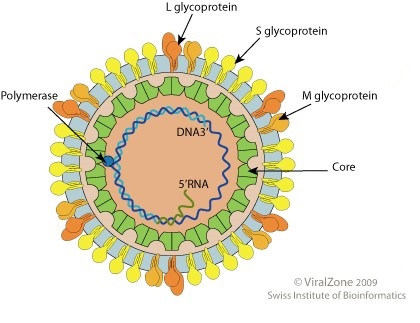
HBV è un virus a DNA che appartiene alla famiglia degli Hepadnaviridae. Il capside che contiene il genoma è formato dalla proteina Core, mentre il suo involucro contiene tre diverse forme della proteina di Superficie chiamate short (S), medium (M) e large (L). La più lunga di queste tre forme è quella responsabile di riconoscere le cellule bersaglio e di facilitare l’ingresso del virus al loro interno. Le altre proteine virali sono la Polimerasi necessaria per la replicazione del virus, la proteina X con funzioni regolatorie, e la proteina E che viene secreta dalle cellule infette.


Schema dell’HBV (da http://www.expasy.org/viralzone, SIB Swiss Institute of Bioinformatics)

Il contagio può avvenire mediante il contatto con sangue o atri fluidi corporei provenienti da un individuo infettato (trasmissione orizzontale); un’altra forma di trasmissione del virus è quella tra madre e figlio durante la gravidanza o al momento del parto (trasmissione verticale).

Il virus può resistere fuori dall’organismo umano per almeno 7 giorni, e il periodo di incubazione varia dai 30 ai 180 giorni. L’esito dell’infezione dipende soprattutto dall’età del soggetto infettato: il 95% dei neonati e il 5% degli adulti sviluppano un’infezione cronica. Nel resto dei casi si produce un’infezione acuta che può risolversi da sola, o portare a epatite fulminante nell’1% dei casi. Senza un trapianto di fegato l’epatite acuta fulminante può essere mortale.

Nel caso dell’infezione cronica, l’individuo portatore del virus può sviluppare col tempo una condizione chiamata cirrosi, in cui il funzionamento del fegato è compromesso, o addirittura un tipo di tumore chiamato epatocarcinoma.

Il genoma di HBV è costituto da una molecola di DNA a doppia catena chiamata rcDNA (DNA rilassato circolare), in cui una delle eliche non è completa. Quando il virus riesce ad entrare nelle cellule del fegato (epatociti), i sistemi cellulari che normalmente si occupano di riparare il nostro DNA riconoscono l’elica incompleta come se fosse DNA danneggiato e si attivano per ripararlo. Così facendo si forma un mini cromosoma detto cccDNA (DNA circolare covalentemente chiuso) che costituisce la struttura più stabile del DNA virale, ed è la base per la replicazione del virus e per la produzione delle sue proteina.

Talvolta il DNA del virus può inserirsi all’interno del DNA dell’ospite (integrazione); in questo  caso il virus perde la capacità di replicarsi e può produrre solo la proteina di superficie. L’integrazione del DNA virale avviene in posizioni casuali e può interrompere o alterare geni che codificano per proteine umane. L’integrazione è una delle cause dell’insorgenza dell’epatocarcinoma.

Al momento non esiste una cura per l’eliminazione definitiva del virus dall’organismo del paziente infettato, anche se sono disponibili dei farmaci per rallentare il decorso della malattia, che riducono l’insorgenza del cancro e migliorano la sopravvivenza del paziente. Questi farmaci agiscono sopprimendo la replicazione del virus, ma poiché esso non viene eliminato, i pazienti devono assumere i medicinali antivirali per lunghi periodi di tempo e addirittura per tutta la vita.

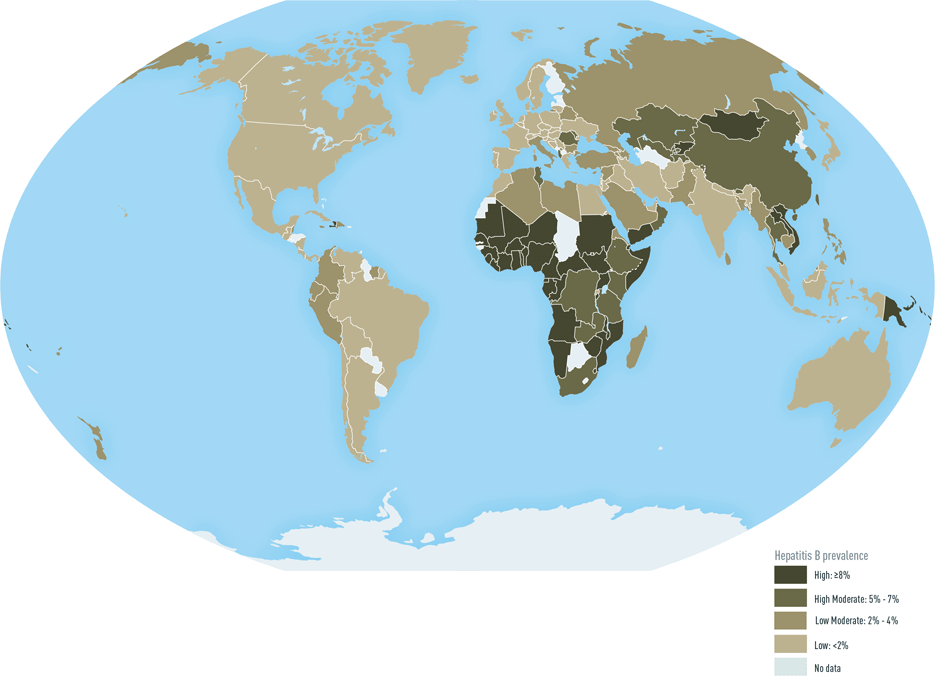
Dal 1982 è disponibile un vaccino preventivo nei confronti di HBV che ha ridotto l’incidenza dell’infezione; nonostante ciò in alcune zone del mondo (tra cui Cina, Sud-Est Asiatico, Africa, Medio Oriente e Amazzonia) il virus è endemico, ovvero la sua presenza è radicata e persistente. Il vaccino è sicuro, e risulta efficace nel 95% delle persone che possiedono un sistema immunitario sano e funzionante (immunocompetenti), garantendo una protezione che dura almeno 20 anni. Dopo la somministrazione del vaccino il nostro sistema immunitario diventa capace di produrre anticorpi che riconoscono la proteina di superficie del virus; nel caso in cui venissimo a contatto con delle particelle virali di HBV tali anticorpi sarebbero capaci di intercettare il virus prima che esso raggiunga il fegato, evitando l’infezione e la conseguente malattia. La diffusione del vaccino ha reso possibile non solo la diminuzione dei casi d’infezione, ma anche dell’insorgenza dell’epatocarcinoma. Nel 2017 in Europa solo lo 0.4% dei bambini sotto i 5 anni risultava infetto da HBV, e la maggior parte dei 15 milioni di persone con epatite B era costituta da adulti nati prima del 1990.

Bibliografia

Global, regional, and national incidence, prevalence, and years lived with disability for 328 diseases and injuries for 195 countries, 1990–2016: a systematic analysis for the Global Burden of Disease Study 2016, GBD 2016 Disease and Injury Incidence and Prevalence Collaborators, Lancet 2017 https://doi.org/10.1016/S0140-6736(17)32154-2

Mechanisms of HBV-induced hepatocellular carcinoma, Levrero M. et al., Journal of Hepatology 2016, https://doi.org/10.1016/j.jhep.2016.02.021

HBV DNA Integration: Molecular Mechanisms and Clinical Implications, Tu T. et al., Viruses 2017, http://doi:10.3390/v9040075

Hepatitis B Virus Infection, Trépo C. et al., Lancet 2014, http://10.1016/S0140-6736(14)60220-8

Organizzazione Mondiale della Sanitá: https://www.who.int/news-room/fact-sheets/detail/hepatitis-b

Mappa della diffusione di HBV da https://wwwnc.cdc.gov/travel/yellowbook/2020/travel-related-infectious-diseases/hepatitis-b

The most common chronic viral infection

Viral infections can be classifed into acute or chronic. In the case of an acute infection, the virus survives in the host for a limited period of time before being cleared; if the virus persists in its host, the infection becomes chronic.

Chronic hepatitis B virus (HBV) infection is the most common worldwide, with 468 million people infected in 2016; moreover, it is calculated that about 30% of the world population (2 billion people) had encountered this virus at least once during their life.

HBV infects the liver causing a disease called hepatitis, characterized by inflammation and cell death.

HBV is a DNA virus belonging to the Hepadnaviridae family. Its capsid containing the genome is made of the Core protein, while its envelope consists of three different forms of the Surface protein, called short (S), medium (M) e large (L). The L surface protein is responsible for the attachment to the target cells and for its entry inside them. Other viral proteins are the Polymerase, necessary for viral replication, protein X with regulatory functions, and protein E that is secreted from the infected cell.

Scheme of HBV(from http://www.expasy.org/viralzone, SIB Swiss Institute of Bioinformatics)

Infection occurs through contact with blood or other body fluids from an infected individual (orizzontal transmission); another way of infection is the mother-infant transmission during pregnancy or at birth (verical transmission).

HBV can survive outside the organism for at least 7 days, and incubation time varies between 30 and 180 days. The outcome of the infection depends mostly on the age of the host: 95% dei newborns and 5% of adults develop a chronic infection. In the rest of the cases, the outcome is an acute infection that may either be self-resolving or lead to fulminat hepatits in 1% of cases. Without liver transplantation, acute fulminat hepatitis can be lethal.

In the case of a chronic infection, the host can with time develope a condition known as cirrhosis, in which liver function is compromised, or even a tumour called hepatocellular carcinoma.

HBV genome is made of one molecule of double stranded DNA called rcDNA (relaxed circular DNA), in which one of the strands is not complete. Once inside the liver cells, the cellular mechanisms that normally repair our DNA, recognize the uncomplete strand as damaged DNA and repair it. This is how a mini chromosome called cccDNA (circular covalently closed DNA) is formed; it is the most stable form of HBV DNA, and it is necessary for the replication of the virus and for the production of its proteins.

Sometimes, the viral DNA can insert itself in the host DNA (integration) losing the ability to replicate and to produce its proteins except for the Surface one. The integration of viral DNA occurs at random sites and can interrupt or alter genes encoding for human proteins. Integration is one of the causes of hepatocellular carcinoma onset.

Nowadays there is no cure for the definitive elimination of the virus from the infected organism, but there are treatments able to slow down the progression of the disease and to reduce the onset of cancer. These treatments act inhibiting viral replication, but, since the virus is not eliminitaed, patients need to take antivirals for a long time or even for life.

A vaccine for HBV has been available since 1982; the vaccination program has reduced the infection rate worldwide, even though HBV is still endemic (present and persistent) in some areas of the world (China, South-East Asia, Africa, Middle East, Amazonia).

The vaccine is safe and effective in 95% of individuals with a healthy and functioning immune system (immunecompetent), ensuring long-lasting protection (at least 20 years). After vaccine administration our immune system becomes able to produce antibodies against the surface protein; in case of contact with HBV viral particles, such antibodies could intercept the virus before it reaches the liver, avoiding the infection and the following disease. Vaccination has decreased both the HBV infection rate and the onset of liver cancer. In 2017, in Europe, only 0.4% of children under 5 were infected with HBV, and most of the 15 million people with hepatis B were adults born before the vaccine became widely available in the 1990s.

Bibliography

Global, regional, and national incidence, prevalence, and years lived with disability for 328 diseases and injuries for 195 countries, 1990–2016: a systematic analysis for the Global Burden of Disease Study 2016, GBD 2016 Disease and Injury Incidence and Prevalence Collaborators, Lancet 2017 https://doi.org/10.1016/S0140-6736(17)32154-2

Mechanisms of HBV-induced hepatocellular carcinoma, Levrero M. et al., Journal of Hepatology 2016, https://doi.org/10.1016/j.jhep.2016.02.021

HBV DNA Integration: Molecular Mechanisms and Clinical Implications, Tu T. et al., Viruses 2017, http://doi:10.3390/v9040075

Hepatitis B Virus Infection, Trépo C. et al., Lancet 2014, http://10.1016/S0140-6736(14)60220-8

World Health Organization: https://www.who.int/news-room/fact-sheets/detail/hepatitis-b

Map of HBV prevalence from https://wwwnc.cdc.gov/travel/yellowbook/2020/travel-related-infectious-diseases/hepatitis-b

Giornata Internazionale delle Donne e delle Ragazze nella Scienza

L’11 febbraio di ogni anno si celebra la Giornata Internazionale delle donne e delle ragazze nella Scienza, proclamata dall’Assemblea Generale delle Nazioni Unite nel 2015 con l’obiettivo di promuovere pieno ed equo accesso a donne di tutte le età a scienza, tecnologia e innovazione.

In occasione di questa ricorrenza, vi propongo i ritratti di 3 donne più o meno conosciute, che sono state delle pioniere in diversi settori della scienza e della tecnologia.

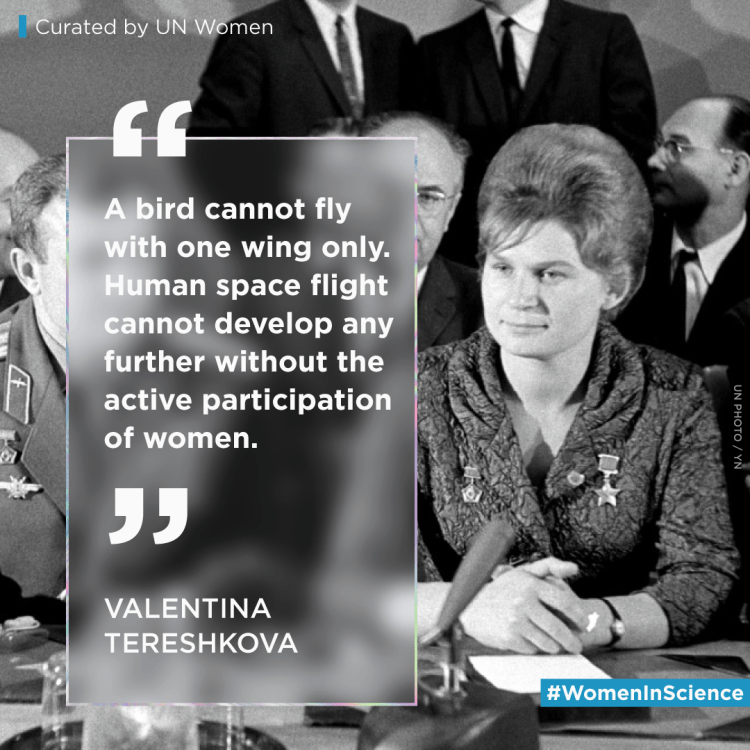
Valentina Tereshkova (1937-) è stata la prima donna cosmonauta. A bordo di Volstok 6, il 16 giugno 1963 iniziò la sua missione rimanendo in orbita per 23 ore e 12 minuti. Raccolse dati sulle reazioni del suo organismo durante il volo spaziale e scattò foto del pianeta Terra che contribuirono alla comprensione delle caratteristiche dell’atmosfera terrestre. Insieme a lei avevano iniziato l’addestramento altre 4 candidate, selezionate tra più di 400 partecipanti alle selezioni indette dal governo sovietico.

“Un uccello non può volare con una sola ala. Il volo spaziale ‘umano non può svilupparsi ulteriormente senza la partecipazione attiva delle donne.”
Foto da https://en.unesco.org/commemorations/womenandgirlinscienceday

Eva Mameli Calvino (1886-1978) fu la prima donna in Italia ad ottenere la docenza presso una Università. Si laureò in Matematica all’Università di Cagliari nel 1905 e in Scienze Naturali all’Università di Pavia nel 1907. Nel 1915 diventò docente di Botanica presso l’Università di Pavia. Nel 1920 sposò Mario Calvino e si trasferì a Cuba, diventando capo del dipartimento di Botanica della Stazione Agraria Sperimentale di Santiago de las Vegas, di cui suo marito era direttore. Nell’isola caraibica svolse attività di ricerca su coltivazioni di interesse industriale come il tabacco (varietà havanensis) e la canna da zucchero; si dedicò inoltre a promuovere l’istruzione scientifica femminile. Cinque anni dopo tornò in Italia; fu direttrice dell’Orto Botanico di Cagliari e della Stazione Sperimentale di Floricultura di Sanremo.

Rosalind Franklin (1920-1959) fu la ricercatrice in chimica fisica che realizzò le fotografie ai raggi X del DNA, fondamentali per la scoperta della struttura a doppia elica. Nel 1951 iniziò a studiare la struttura del DNA presso il King’s College di Londra insieme a Maurice Wilkins e Raymond Gosling. I tre arrivarono a determinare che il DNA poteva esistere in due diverse conformazioni e che esso era costituito da una doppia catena, di cui però non riuscirono a definirne esattamente la struttura. Contemporaneamente James Watson e Francis Crick cercavano di risolvere lo stesso quesito presso il Cavendish Laboratory di Cambridge. Nel gennaio del 1953 Wilkins mostrò a Watson le foto ai raggi X del DNA a insaputa della Franklin; la conoscenza di questi dati non ancora pubblicati facilitò il lavoro di Watson e Crick per l’elaborazione finale del loro modello. Gli articoli dei due gruppi furono pubblicati sullo stesso numero della rivista Nature nell’aprile del 1953. Nel 1958 Rosalind Franklin morì per un tumore alle ovaie. Quattro anni più tardi Watson, Crick e Wilkins ricevettero il premio Nobel per la Medicina; Rosalind Franklin non fu inclusa tra i vincitori in quanto lo statuto del Nobel non ammette riconoscimenti postumi.

Bibliografia

Sito ufficiale della Giornata Internazionale delle donne e delle ragazze nella Scienza https://www.un.org/en/observances/women-and-girls-in-science-day

https://www.esa.int/About_Us/ESA_history/50_years_of_humans_in_space/First_woman_in_space_Valentina

https://www.nasa.gov/mediacast/valentina-tereshkova-and-sally-ride-women-space-pioneers

http://www.retemuseiuniversitari.unimore.it/site/home/storie/eva-mameli-calvino/articolo160034716.html

“Expediente Sra Eva Mameli de Calvino” utile e forestiera botanica a Cuba, Secci M. C., Centroamericana 2014 http://www.centroamericana.it/2015/07/09/volumen-24-22014/

The double helix and the ‘wronged heroine’, Maddox B., Nature 2003 http://doi.org/10.1038/nature01399

Rosalind Franklin and the discovery of the structure of the DNA, Klug A., Nature, 1968 https://doi.org/10.1038/219808a0

Molecular configuration in sodium thymonucleate, Franklin R. et al., Nature, 1963 https://doi.org/10.1038/171740a0

International Day of Women and Girls in Science

Every year, on February the 11th, we celebrate the International Day of Women and Girls in Science, declared by the General Assembly of the United Nations in 2015 in order to promote full and equal access to science, technology, and innovation to women of all ages.

With the occasion of this special date, I have decided to write about three women that were pioneers in different fields of science and technology.

Valentina Tereshkova (1937-) has been the first woman to travel into space. On the 16th of June 1963, she started her mission on Volstok 6, space flying for 23 hours and 12 minutes. She collected data on the reactions of her body during the flight and took pictures of the planet Eearth, which were very important to determine the composition of the atmosphere. She had started the training together with other 4 candidtes, chosen among more than 400 women that had applied to the call of the Soviet government.

Eva Mameli Calvino (1886-1978) was the first woman in Italy to become a University teacher. She graduated both in Mathematics at the University of Cagliari in 1905 and in Natural Science at the Univeristy of Pavia in 1907. In 1915 she started teaching Botanics at the University of Pavia. In 1920 she married Mario Calvino and the moved to Cuba, where she worked as head of the department of Botanics at the Agricultural Experimental Station of Santiago de las Vegas, of which her husband was the director. During her stay in Cuba, her research activity focused on industrial crops such as tobacco (expecially the havanensis variety) and sugar cane; she was also a promoter of female scientific education. Five years later she went back to Italy; she was the director of the Botanic Garden of Cagliari and of the Floriculture Experimental Station in Sanremo.

Rosalind Franklin (1920-1959) was the researcher in physical chemistry who took the X ray pictures of DNA determinant for the discovery of the double helix. In 1951 she started her research about the structure of DNA at King’s College in London with Maurice Wilkins and Raymond Gosling. They worked out that DNA could exist in two different conformations, but they were not able to determine its exact structure. At the same time, James Watson and Francis Crick were working on the same topic at the Cavendish Laboratory in Cambridge. In January 1953 Wilkins showed to Watson Franklin’s  X ray pictures of DNA without asking her permission; the access to those unpublished data helped Watson and Crick in the final elaboration of their model. The papers of both groups were published in the same issue of Nature in April 1953. In 1958 Rosalind Franklin dead of ovarian cancer. Four years later, Watson, Crick, and Wilkins received the Nobel Prize for  Medicine; Rosalind Franklin was not included since the Nobel statute does not admit posthumous awards.

https://www.un.org/en/observances/women-and-girls-in-science-day

https://www.esa.int/About_Us/ESA_history/50_years_of_humans_in_space/First_woman_in_space_Valentina

https://www.nasa.gov/mediacast/valentina-tereshkova-and-sally-ride-women-space-pioneers

http://www.retemuseiuniversitari.unimore.it/site/home/storie/eva-mameli-calvino/articolo160034716.html

“Expediente Sra Eva Mameli de Calvino” utile e forestiera botanica a Cuba, Secci M. C., Centroamericana 2014 http://www.centroamericana.it/2015/07/09/volumen-24-22014/

The double helix and the ‘wronged heroine’, Maddox B., Nature 2003 http://doi.org/10.1038/nature01399

Rosalind Franklin and the discovery of the structure of the DNA, Klug A., Nature, 1968 https://doi.org/10.1038/219808a0

Molecular configuration in sodium thymonucleate, Franklin R. et al., Nature, 1963 https://doi.org/10.1038/171740a0

Women in STEM: dr. Carla

Martina from Scicomm for everyone interviewed me for her series on women in STEM. We talked about work-life balance, equality in STEM and role models.

Martina di Scicomm for everyone mi ha intervistato per la sua serie di post sulle donne nella scienza.
Abbiamo parlato di equilibrio tra lavoro e vita privata, parità di genere nel mondo scientifico e di modelli da seguire.

dr. Martina Bodner's avatarSciComm for everyone

dr. Carla, in the lab

Forth episode of Women in STEM. Today, I have the pleasure to host dr. Carla. A scientist working on Hepatitis Delta Virus, a dear friend of mine and creator of Virus&Co.

Hi Carla, welcome! First of all, would you like to tell us something about you?

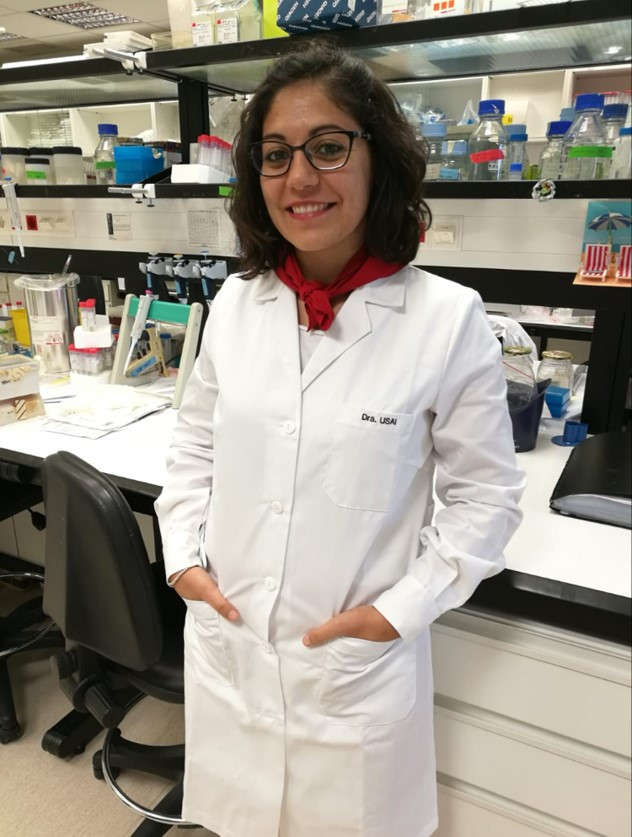
Hi Martina, hello everyone and thank you for inviting me. I am 32 years old and I am currently a post-doctoral researcher at the Blizard Institute, Queen Mary University of London. I hold a Master’s Degree in Industrial Biotechnology, and I am a Ph.D. in Biomedical Research. I am also a serial reader and I am learning the basics of photography. I like writing, and one of my projects for 2020 is to be more active in science communication and public engagement.

When did you start your Instagram and Twitter accounts? How did you get the idea?

I…

View original post 1,330 more words

Design a site like this with WordPress.com
Get started