2019-nCoV: come nasce un virus

Nelle ultime settimane è stato identificato un nuovo virus che causa polmonite negli esseri umani: è stato chiamato 2019-nCoV (2019 novel Coronavirus) e si è originato nella città cinese di Wuhan.

Il sito del Centro Europeo per la Prevenzione e il controllo delle Malattie (ECDC) riporta che al 26 gennaio 2020 sono stati confermati 2026 casi di contagio, di cui 1988 in Cina. Gli altri paesi coinvolti sono Taiwan, Tailandia, Australia, Malesia, Singapore, Francia, Giappone, USA, Corea del Sud, Vietnam, Canada e Nepal. Tutte le persone contagiate dal virus tranne un unico in caso in Vietnam, erano state recentemente in Cina. Tra i pazienti colpiti alcuni hanno sviluppato una patologia grave che è risultata letale in 56 casi (tutti registrati in Cina), mentre altri hanno manifestato sintomi più lievi che non hanno richiesto un ricovero prolungato in ospedale. I sintomi dell’infezione da 2019-nCoV sono febbre, tosse, dolori muscolari e debolezza.

2019-nCoV fa parte della famiglia dei Coronaviridae, caratterizzati da un genoma a RNA contenente 6 o più geni, e dotati di pericapside (involucro lipidico in cui sono inserite anche proteine del virus). I coronavirus infettano mammiferi e uccelli e si trasmettono tra animali della stessa specie, ma talvolta possono trasmettersi dagli animali all’uomo, come nel caso del coronavirus che causò la pandemia di SARS* nel 2002 (trasmesso dagli zibetti) e di quello che causò la MERS** nel 2012 (trasmesso dai dromedari). I coronavirus capaci di infettare le persone causano malattie respiratorie che vanno dal comune raffreddore a patologie più gravi come la MERS.

I geni dei coronavirus contengono le istruzioni per la produzione delle proteine virali, le più importanti delle quali si chiamano Spike (S), Membrane (M), Envelope (E), e Nucleocapsid (N).
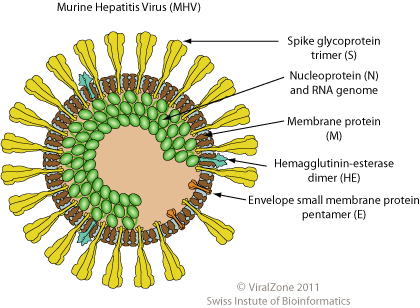
Schema di un Coronavirus (da http://http://www.expasy.org/viralzone, SIB Swiss Institute of Bioinformatics)

La proteina Spike sporge dall’involucro esterno formando la “corona” visibile al microscopio che dà il nome a questa famiglia di virus; ha la funzione di consentire l’adesione tra il virus e le proteine che si trovano sulla superficie esterna delle cellule dell’organismo che verrà infettato. In alcuni casi la proteina S ha anche la funzione di far fondere le cellule infettate con altre cellule vicine per favorire la diffusione del virus.

La proteina M attraversa la membrana del virus facendola curvare e determinando la forma sferica del virione. M interagisce anche con il nucleocapside costituto dall’RNA del virus e dalla proteina N.

La proteina E è invece necessaria per l’assemblaggio di nuove particelle virali e per il loro rilascio dalla cellula infettata, è quindi necessaria per la diffusione del virus.

Il nuovo virus 2019-nCoV ha iniziato a diffondersi da un mercato della città di Wuhan, in cui vengono commerciati animali vivi a scopo alimentare, suggerendo il contagio da animale a uomo. Col passare del tempo però sono stati registrati casi di persone infettate dal virus che non avevano frequentato il mercato di Wuhan, dimostrando che il virus è diventato capace di trasmettersi da persona a persona. Molto probabilmente il contagio avviene per via aerea attraverso piccole goccioline espulse con la tosse o con gli starnuti. Gli scienziati stanno lavorando per capire con quanta facilità il virus si possa diffondere tramite questa modalità da persona a persona, e quale sia la sua virulenza, ovvero la capacità di causare una malattia e con quale severità. Al momento sembra che affinché avvenga il contagio sia necessario essere a stretto contatto con un individuo infetto.

L’ipotesi avanzata in un primo momento secondo cui i serpenti sarebbero stati la fonte di questo virus è stata successivamente smentita, e ancora non si sa esattamente come si sia originato. La sequenza del suo RNA è molto simile sia a quella di altri virus che circolano tra i pipistrelli sia a quello della SARS, e sono in corso degli studi per capire quale sia la specie che l’abbia inizialmente trasmesso all’uomo.

Al momento non esiste un vaccino per proteggerci da questo virus né un trattamento specifico, ma i sintomi della malattia causata da 2019-nCoV possono essere curati.

Restano valide le precauzioni che vengono messe in atto con altri virus respiratori: coprirsi la bocca quando si starnutisce, usare fazzoletti usa e getta, lavarsi spesso le mani con acqua e sapone o con altri prodotti disinfettanti, non toccarsi gli occhi, la bocca o il naso senza aver prima lavato le mani.

Ma come nasce un nuovo virus? E come è possibile che si trasmetta tra specie diverse passando da un animale all’uomo?

I virus emergenti capaci di infettare l’uomo hanno prevalentemente genomi fatti di RNA, e si originano con più frequenza in regioni densamente popolate e in cui l’attività umana è particolarmente intensa.

Affinché un nuovo virus possa emergere, devono verificarsi diversi fattori tra cui lo stretto contatto tra animali e l’uomo, e delle modificazioni genetiche del virus.

Questo processo avviene attraverso tre fasi:

1) il virus acquisisce la capacità di infettare cellule di un nuovo organismo,

2) il virus si adatta al nuovo ospite e viene trasmesso tra individui,

3) il nuovo virus acquisisce la capacità di diffondersi in forma epidemica nella popolazione.

Mentre le prime due fasi richiedono cambiamenti genetici nel virus, la terza fase coinvolge cambiamenti nelle dinamiche della popolazione infettata come l’aumento dei contatti tra individui e i loro spostamenti.

Quando diciamo che un virus replica, intendiamo che produce molte copie del suo materiale genetico; i virus però non hanno modo di controllare la fedeltà delle copie che producono, e quindi spesso introducono degli errori nel loro genoma (mutazioni). Questo porta alla formazione di particelle virali con genoma simili ma non esattamente identici a causa della presenza di errori di “copiatura”.

Se uno di questi errori cambia le istruzioni per la produzione della proteina che si lega alle cellule da infettare, e la nuova versione della proteina è capace di legarsi a cellule di un organismo diverso, ecco che avviene il “salto di specie”.

Il genoma di un virus può modificarsi anche tramite altri due fenomeni chiamati “ricombinazione” e “riarrassortimento”.

La ricombinazione avviene quando frammenti di genomi di virus simili tra loro si mescolano formando nuove sequenze. È quello che è successo nel caso di un coronavirus responsabile della bronchite nelle galline: una ricombinazione nella sequenza della proteina Spike con un altro gene S di origine sconosciuta ha dato vita a un virus ibrido che è risultato capace di infettare i tacchini causando però una malattia intestinale invece che respiratoria. Questo nuovo virus inoltre perse la capacità di infettare le galline.

Il riassortimento avviene invece solo in quei virus il cui genoma è costituito da più frammenti di RNA o DNA (virus segmentati). Se una cellula viene infettata contemporaneamente da due virus segmentati diversi tra loro, può accadere che frammenti di provenienza diversa vengano impacchettati nella stessa particella virale, producendo dei virus che sono una combinazione dei due virus originali.

Anche il riassortimento può facilitare il salto di specie. È quello che è successo con il virus pandemico 2009  IAV H1N1: si ritiene che nel 1998 frammenti provenienti dai virus dell’influenza aviaria, suina e umana si siano combinati in un nuovo virus capace di circolare tra i suini, chiamato H3N2 IAV; nel 2009 questo virus si è a sua volta riassortito con un altro virus dell’influenza dei polli formando un terzo virus capace di diffondersi tra la popolazione umana.

Da quanto abbiamo detto finora risulta chiaro che I virus hanno una grande capacità di evolversi rapidamente, e ciò li rende particolarmente pericolosi perché così facendo possono sfuggire alla risposta immunitaria e ai trattamenti antivirali. Bisogna però sottolineare che solo una piccola percentuale dei nuovi virus che si formano riescono ad incontrare facilmente una nuova specie ospite e ad adattarsi ad essa. Infatti numero di particelle virali che vengono trasmesse da individuo a individuo dipende dalla capacità del virus di crescere all’interno dell’organismo infettato, e questo è un punto critico per molti virus emergenti.

Quando compare un nuovo virus possono verificarsi diverse situazioni:

a) se il virus si replica con poca efficienza nel nuovo ospite ci saranno meno particelle virali liberate (per esempio con le goccioline emesse con uno starnuto) quindi meno particelle che raggiungeranno un altro individuo da infettare;

b) se il virus è troppo aggressivo non permetterà all’ospite di sopravvivere abbastanza per trasmettere un numero elevato di particelle virali ad altri individui e la sua diffusione sarà limitata (la morte dell’ospite è uno svantaggio per il virus);

c) solo quei virus che riusciranno ad adattarsi rapidamente al loro ospite e a raggiungere il giusto equilibrio con esso saranno capaci di crescere e diffondersi efficacemente nella popolazione.

Nel mondo attuale l’emergere di nuove malattie infettive e il riemergere di altre è facilitato dalla globalizzazione che consente il rapido movimento di persone tra luoghi del pianeta anche molto lontani tra loro. I viaggiatori possono portare con sé da un posto all’altro nuovi virus favorendone la diffusione. Anche gli insetti vettori di virus possono essere trasportati in questo modo, introducendo patogeni in nuove aree. Il cambiamento climatico può avere degli effetti in questo contesto, in quanto il verificarsi di condizioni climatiche favorevoli alla sopravvivenza e alla riproduzione dei vettori in zone diverse da quella d’origine può amplificare la diffusione dei virus da essi trasportati.

Il vantaggio che la globalizzazione ci offre per rispondere a queste situazioni è la rapida comunicazione e collaborazione tra scienziati a livello internazionale, come ci sta dimostrando il caso del 2019-nCoV: pochi giorni dopo i primi casi di contagio il virus è stato identificato e sequenziato, la sequenza è stata resa pubblica consentendo a diversi gruppi di ricercatori di iniziare a lavorare per individuarne l’origine, realizzare dei test diagnostici ed elaborare modelli matematici per prevederne la velocità di diffusione.

In questo momento ricercatori di tutto il mondo sono al lavoro per capire meglio il meccanismo con cui 2019-nCoV causa la malattia e per riuscire a limitarne la diffusione.

*SARS Severe Acute Respiratory Syndrome; ** MERS Middle East Respiratory Syndrome

Per saperne di più sulle caratteristiche generali dei virus, leggi il mio post Il magico mondo dei virus.

Bibliografia

European Centre for Disease Prevention and Control: https://www.ecdc.europa.eu/en/geographical-distribution-2019-ncov-cases

World Health Organization: https://www.who.int/emergencies/diseases/novel-coronavirus-2019; https://www.who.int/emergencies/mers-cov/en/ ; https://www.who.int/csr/sars/en/

Centers for Disease Control and Prevention: https://www.cdc.gov/coronavirus/2019-ncov/summary.html

Clinical features of patients infected with 2019 novel coronavirus in Wuhan, China. Huang C. et al, Lancet 2020, http://doi.org/10.1016/s0140-6736(20)30183-5

Coronaviruses: genome structure, replication, and pathogenesis. Chen Y. et al., J Med Virol 2020, https://doi.org/10.1186/s12985-019-1182-0

Coronavirus envelope protein: current knowledge. Schoeman D., Fielding B.C., Virol J 2019, http://doi.org/10.1186/s12985-019-1182-0

Evolutionary ecology of virus emergence. Dennehy J.J.,  Ann. N.Y. Acad. Sci 2017, http://doi.org/10.1111/nyas.13304

Emerging and re-emerging viruses in the era of globalisation. Zappa A. et al., Blood Transfus. 2009, http://doi.org/10.2450/2009.0076-08

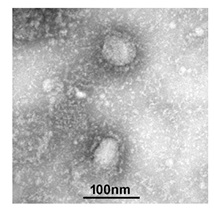
Foto da http://www.im.cas.cn/xwzx2018/jqyw/202001/t20200124_5494401.html
2019-nCoV: a Virus is born

In the last few weeks, a new virus causing pneumonia in humans has been identified: it has been temporarily called  2019-nCoV (2019 novel Coronavirus) and was detected for the first time in Wuhan, China.

The website of the European Centre for Disease Prevention and Control (ECDC) reports that by January 26th, 2020, 2026 cases have been confirmed, 1988 of them in China. Other countries involved are Taiwan, Thailand, Australia, Malaysia, Singapore, France, Japan, USA, South Korea, Vietnam, Canada, and Nepal.

All the infected patients except for one single case in Vietnam had recently traveled from China. Some patients developed severe illness, that was deadly in 56 cases (all of them in China), while others had milder symptoms that did not require long hospitalization. The symptoms of the infection with 2019-nCoV are fever, cough, myalgia and fatigue.

2019-nCoV belongs to the family Coronaviridae, characterised by an RNA genome with 6 or more genes, and equipped with a pericapsid (lipidic envelope in which are inserted some viral proteins). Coronaviruses usually infect mammals and birds and spread between animals of the same species, but sometimes they can be transmitted from animals to humans, such in the case of the coronavorus that caused pandemic SARS* in 2002 (transmetted by civet cats) or the one that caused MERS** in 2012 (transmetted by dromedary camels). Coronaviruses infecting humans cause respiratory diseases ranging from common cold to more severe pathologies like MERS.

The genes of Coronaviruses contain instructions for the production of the viral proteins; the most important ones are Spike (S), Membrane (M), Envelope (E), and Nucleocapsid (N).

Diagram of a Coronavirus (taken from http://www.expasy.org/viralzone, SIB Swiss Institute of Bioinformatics)

The Spike protein sticks out of the envelope creating a crown shape visible at the microscope that gives the name to these viruses (corona is the Latin word for crown); it mediates the adhesion between the virus and the proteins on the external surface of the cells that will be infected. Sometimes S can also mediate the fusion between the infected cell and other adjacent cells facilitating the spreding of the virus.

The M protein is embedded in the membrane of the virus, causing its curvature and giving the virions a spherical shape. M interacts with the nucleocapsid that contains the RNA of the virus and the N protein.

Protein E is necessary for the formation of new particles and for their release from the infected cells, therefore it is necessary for the spread of the virus.

The new virus 2019-nCoV is thought to have originated in an animal market of Wuhan, suggesting a first transmission from an animal species to humans.  Later on, however, more cases of infection in people that had not visited animal markets were reported, showing that the virus has acquired human-to-human transmission capability. Transmission of the virus is very likely to ocurr via respiratory droplets produced when an infected person coughs or sneezes. Scientists are currently working to understand how easily the virus spreads, and to determine its virulence, that is its capability to cause illness and with what severity. At the moment, it looks like that transmission ocurrs only between close contacts.

It was initially hypothesized that snakes were the source for the new virus, but this theory was lately dismissed, and it is still unknown how 2019-nCoV originated. The sequence of its RNA is very similar to that of some bat Coronaviruses and also to the SARS virus, but investigations are ongoing to determine which animal species transmitted it to humans at the beginning of its spread.

There is currently no vaccine to prevent 2019-nCoV infection, and there is no specific antiviral treatment, but the symptoms of the disease can be treated.

The same actions to help prevent the spread of other respiratory viruses are recommended: cover your cough or sneeze, use disposable tissues, wash your hands often with soap and water or alcohol-based hand sanitizer, avoid touching your eyes, nose, and mouth with unwashed hands.

But where does a new virus come from? And how can it be transmitted between different species, spreading from animals to humans?

Emerging viruses able to infect humans have mainly RNA genomes, and they more often arise in densely populated areas with intense human activity.

Virus emergence requires several factors, such as close contacts between animals and humans, and genetic modifications of the virus. This is a three-phase process:

1) the virus acquires the capability to infect new cell types,

2) the virus adapts to the new host, and can be transmitted between individuals,

3) the new virus acquires the ability to spread epidemically through the host population.

The first two phases require genetic changes in the virus, while the third phase involves changes in the dynamic of the host population, like contacts between individuals and their circulation.

When a virus replicates, it produces lots of copies of its genetic material; viruses are not able to control the quality of the copies they produce, so they often introduce errors (mutations) in their genomes. This is how viral particles with similar but not identical genomes are produced.

Sometimes one of these errors can change the instructions for the production of the protein that binds to the surface of the host cell, and the new version of the protein may become able to bind to cells of a different species; this event is called host shift.

A viral genome can also change through other two different mechanisms called “recombination” and “rearrangement”.

Recombinations occur when fragments from genomes of similar viruses mix together, forming new sequences. That happened in the case of a Coronavirus causing bronchitis in chickens: its sequence for the Spike protein recombined with another S gene of unknown source, giving rise to a new virus able to infect turkeys causing an enteric disease; in addition, the new virus lost its capability to infect chickens.

Rearrangement occurs only when the genome of the virus is made of several fragments of DNA or RNA (segmented viruses). When two or more segmented viruses infect the same cell at the same time, their segments can be packed in the same particle, producing viruses that are a combination of the original ones.

Rearrangement can contribute to host shift as well, such in the case of the pandemic virus 2009  IAV H1N1: in 1998 fragment of influenza viruses from birds, swine and humans rearranged into a new virus circulating in swine, called H3N2 IAV; in 2009  this virus rearranged in turn with an other avian virus, producing a third virus able to spread between humans.

There is no doubt that viruses have a extraordinary capability to rapidly evolve, and are therefore particularly dangerous because they can escape host immune response and antiviral treatments. However, only a small percentage of the new viruses are able to infect a new species and to adapt to the new host. This is because the number of viral particles transmitted between individuals depends on the virus ability to grow inside the infected organism, and this is particularly tricky for most emerging viruses.

Three different scenarios are possible:

a)  if the virus replicates at a low efficiency in the new host, only a few viral particles will be released (i.g by coughing or sneezing) and a very low number of new virions will reach other cells or individuals;

b) if the virus is too aggressive, the host will not survive enough to release a high number of infectious particles, and this will limit its spread (the death of the host is a disadvantage for the virus);

c) only if a virus is able to adapt quickly to the new host and to achieve a correct virus-host balance, it will be able to spread efficiently through the population.

In our modern world, the emergence of new infectious diseases and the re-emergence of others is facilitated by globalization, which allows a rapid movement of people across the planet. Travelers can carry with them new viruses to different places, enhancing their spread. Mosquitoes or other insects that convey viruses can be transferred as well, introducing pathogens into new areas. Climate change has also a role in this context, for example when a vector finds favorable climate conditions for its growth and reproduction in other areas, contributing to the diffusion of the associated viruses.

Nonetheless, globalization also offers us some advantages to counteract the emergence of new viruses, such as the rapid communication and collaboration between scientists all over the world. This is what is happening for 2019-nCoV: a few days after the first reported cases of infection, the virus was identified and sequenced, and the data were shared allowing several groups of researchers to start working to identify the source of the virus, to develop diagnostic methods as well as mathematical models to predict its transmission rate.

Researchers from different countries are currently working to understand the mechanisms by which 2019-nCoV is causing pneumonia and to limit its transmissibility.

*SARS Severe Acute Respiratory Syndrome; ** MERS Middle East Respiratory Syndrome

To learn more about the general features of viruses, read my post The fantastic world of viruses.

Bibliography

European Centre for Disease Prevention and Control: https://www.ecdc.europa.eu/en/geographical-distribution-2019-ncov-cases

World Health Organization: https://www.who.int/emergencies/diseases/novel-coronavirus-2019; https://www.who.int/emergencies/mers-cov/en/ ; https://www.who.int/csr/sars/en/

Centers for Disease Control and Prevention: https://www.cdc.gov/coronavirus/2019-ncov/summary.html

Clinical features of patients infected with 2019 novel coronavirus in Wuhan, China. Huang C. et al, Lancet 2020, http://doi.org/10.1016/s0140-6736(20)30183-5

Coronaviruses: genome structure, replication, and pathogenesis. Chen Y. et al., J Med Virol 2020, https://doi.org/10.1186/s12985-019-1182-0

Coronavirus envelope protein: current knowledge. Schoeman D., Fielding B.C., Virol J 2019, http://doi.org/10.1186/s12985-019-1182-0

Evolutionary ecology of virus emergence. Dennehy J.J.,  Ann. N.Y. Acad. Sci 2017, http://doi.org/10.1111/nyas.13304

Emerging and re-emerging viruses in the era of globalisation. Zappa A. et al., Blood Transfus. 2009, http://doi.org/10.2450/2009.0076-08

Photo from http://www.im.cas.cn/xwzx2018/jqyw/202001/t20200124_5494401.html

The fantastic world of viruses

Given the name I have chosen for this blog, the first entry could only be about viruses!

What are viruses?

Viruses are very special creatures, and my biology teacher in High school introduced them as “packages of information”. In fact, they are simply made of their genetic information in the form of DNA or RNA (genome), surrounded by a coating made of proteins (capsid) and sometimes by a lipidic envelope (pericapsid). Some are also equipped with specific proteins to make copies of their genetic content (replication).

Are viruses alive?

Viruses are not proper living beings since they are not able to reproduce themselves on their own. To do so they must enter a cell and use its functions to complete their replication, produce new proteins for their capsid and form new viral particles (virions) able to invade more cells of the same of other individuals to ensure their spreading. Viruses are therefore microscopic parasites that need a “host” to be alive. This phenomenon is called viral infection.

Are all viruses the same?

There are many kinds of viruses, with different shapes and dimensions, and they are classified by virologists according to their characteristics such as the route of transmission. For example, some viruses can spread in the air, others through body fluids, and others are conveyed by vectors, such as mosquitos or other insects.

There are viruses which all of us have heard about at least once, like influenza virus, the viruses that cause hepatitis (I will write a post about them) and chickenpox (varicella) virus. Some viruses infect animals, others infect plants, and others infect bacteria (bacteriophages).  Some scientists have suggested the presence of viruses in the entire Universe, not only on our planet; the branch of Biology called Astrovirology has the task of discovering and study such alien viruses.

Speaking of plant viruses, it was a viral infection that allowed the production of variegated tulips, extremely sought-after during the XVII century: only infected plants gave origin to multi-coloured flowers. Did you ever imagine that?

Are all viruses harmful?

Often, but not always, a viral infection causes damage to the infected organ, characterised by the death of the cells or their transformation into cancer cells; it is the event of this damage that we call “disease”. Sometimes, however, the infection can be asymptomatic and goes unnoticed. This is the case of viruses that have coexisted for a long time with their host; when the virus and the host species coevolve, the symptoms of the infection go milder and milder (advantage for the host), allowing the infected organism to live longer contributing to the spreading of new infective particles (advantage for the virus).

However, viruses are not always the bad guys. Scientists are now able to exploit their ability to enter into the cells to our benefit. One of the most important achievements of modern biotechnology is indeed virus modification in order to use them as gene therapy vectors: in other words, they are used to transfer the corrected copy of a faulty gene to the cells of patients affected by genetic disorders. But this will be the topic of one of my future posts.

The world of the viruses is really amazing and fascinating, isn’t it?

Bibliography

Viruses and cells intertwined since the dawn of evolution. Durzyńska J.et al., Virol J. 2015, https://doi.org/10.1186/s12985-015-0400-7

Astrovirology: Viruses at Large in the Universe, Berliner A.J. et al., Astrobiology 2018, https://doi.org/10.1089/ast.2017.1649

Tulip Breaking: Past, Present, and Future, Judith A. et al. Plant Disease  2007, https://doi.org/10.1094/PDIS.2000.84.10.1052

Parasite Virulence and Parasite-Host Coevolution: A Reappraisal, Garnick E., The Journal of Parasitology 1992, https://doi.org/10.2307/3283496

Viral Vectors for Gene Transfer,Chen Y.H. et al., Curr Protoc Mouse Biol. 2018 https://doi.org/10.1002/cpmo.58

Picture from freesvg.org (Public domain)

Il magico mondo dei virus

Visto il nome che ho scelto per questo blog, il primo articolo non poteva essere che sui virus!

Cosa sono i virus?

I virus sono delle “creature” molto particolari, e ricordo che la mia insegnate di scienze delle superiori ce li presentò come dei “pacchetti di informazioni”.  In effetti, essi sono costituiti semplicemente dal loro materiale genetico sotto forma di DNA o RNA (genoma), circondata da un rivestimento fatto di proteine (capside) e talvolta da un involucro lipidico (pericapside). Alcuni di essi, ma non tutti, sono anche forniti di specifiche proteine che consentono di fare nuove copie del loro genoma (replicazione).

I virus sono esseri viventi?

I virus non sono dei veri e propri esseri viventi poiché non sono in grado di riprodursi autonomamente. Per farlo sono costretti a entrare dentro una cellula e a utilizzare le funzioni cellulari per portare a termine la replicazione del loro genoma, produrre nuove proteine del capside e formare nuove particelle virali (virioni) capaci di invadere altre cellule dello stesso o di altri individui per assicurare il loro perpetuarsi. I virus sono quindi dei microscopici parassiti che hanno bisogno di un “ospite” per poter vivere. Questo processo è chiamato infezione virale.

I virus sono tutti uguali?

I virus non sono tutti uguali tra loro, ne esistono di diverse forme e dimensioni e vengono classificati dai virologi in base alle loro caratteristiche tra cui la via di trasmissione. Ad esempio alcuni virus si trasmettono per via aerea, altri tramite fluidi corporei e altri ancora vengono trasportati da vettori, come le zanzare o altri insetti.

Ci sono dei virus di cui tutti abbiamo sentito parlare almeno una volta come il virus dell’influenza, i virus che causano l’epatite (di cui parlerò in uno dei prossimi articoli) e il virus della varicella. Esistono virus che infettano animali, virus che infettano le piante, e altri che infettano i batteri (batteriofagi). Alcuni scienziati hanno addirittura suggerito la presenza dei virus nell’Universo anche al di fuori del nostro pianeta; è compito della disciplina chiamata Astrovirologia scoprirli e studiarli.

Per quanto riguarda le piante, è stata proprio un’infezione virale a permettere la produzione di ricercatissimi tulipani variegati di gran valore nel XVII secolo: solo piante infettate davano origine a fiori dalla colorazione irregolare. L’avreste mai detto?

Tutti i virus sono dannosi?

Spesso, ma non sempre, un’infezione virale causa un danno dell’organo infettato, caratterizzato dalla morte delle cellule o dalla loro trasformazione in cellule tumorali, ed è proprio la manifestazione di questo danno ciò che noi chiamiamo malattia. Talvolta però l’infezione può essere asintomatica e passare inosservata. È questo il caso dei virus che convivono da molto tempo con la loro specie ospite; quando il virus e l’ospite si evolvono di pari passo, i sintomi dell’infezione diventano sempre più leggeri (vantaggio per l’ospite) permettendo all’organismo infettato di sopravvivere a lungo contribuendo alla diffusione di nuove particelle infettive (vantaggio per il virus).

I virus però, non fanno sempre la parte dei cattivi. Gli scienziati sono riusciti a sfruttare la loro capacità di entrare dentro le cellule per poterli usare a nostro vantaggio. Una delle grandi conquiste delle moderne biotecnologie è la manipolazione dei virus per impiegarli come vettori per la terapia genica, ovvero per poter trasportare copie corrette di geni difettosi nelle cellule dei pazienti affetti da malattie genetiche. Ma anche di questo parlerò in uno dei prossimi articoli.

Il mondo dei virus è veramente affascinante e pieno di soprese, non vi sembra?

Bibliografia:

Viruses and cells intertwined since the dawn of evolution. Durzyńska J.et al., Virol J. 2015, https://doi.org/10.1186/s12985-015-0400-7

Astrovirology: Viruses at Large in the Universe, Berliner A.J. et al., Astrobiology 2018, https://doi.org/10.1089/ast.2017.1649

Tulip Breaking: Past, Present, and Future, Judith A. et al. Plant Disease  2007, https://doi.org/10.1094/PDIS.2000.84.10.1052

Parasite Virulence and Parasite-Host Coevolution: A Reappraisal, Garnick E., The Journal of Parasitology 1992, https://doi.org/10.2307/3283496

Viral Vectors for Gene Transfer,Chen Y.H. et al., Curr Protoc Mouse Biol. 2018 https://doi.org/10.1002/cpmo.58

Immagine da freesvg.org (Dominio pubblico)

Let me introduce myself

Hello everyone!

My name is Carla and I am a biotechnologist: I have always been attracted by the infinitely small and by the microscopic world.

I am a researcher at the Blizard Institute, a research centre of the Queen Mary University of London, where I work on the smallest virus that can infect humans: the hepatitis delta virus (HDV).

With this blog, I would like to show you the fantastic world of viruses and biotechnology, and I will be happy if you would join me in my daily life as a scientist. I will write my posts both in English and Italian.

If you have any curiosity about science or if there is any topic you are particularly interested in, please leave a comment and I will write a post for you!

Photo credit: Carla Usai

Design a site like this with WordPress.com
Get started